

ISSN: 0973-7510
E-ISSN: 2581-690X

Bladder urothelial carcinoma (BLCA) is a molecularly heterogeneous malignancy with substantial unmet needs in risk stratification and therapeutic optimization. While the urinary microbiome has emerged as a critical modulator of cancer biology, its systems-level integration with host genomic, transcriptomic, and immune multi-omics data remains poorly characterized. We performed an integrative in silico analysis of 412 muscle-invasive bladder cancers from The Cancer Genome Atlas (TCGA-BLCA), combining curated microbial abundance profiles with host transcriptomic, epigenomic, mutational, immune deconvolution, and clinical survival data. Differential abundance analysis, Spearman correlation networks, Gene Set Enrichment Analysis, and machine-learning-based prognostic modeling were employed to identify microbe-host interaction landscapes and evaluate clinical translational potential. We identified profound microbial dysbiosis in tumor tissues, with Paenibacillus (31.1-fold enrichment, P = 2.56 × 10⁻⁶) and Prevotella (19.0-fold enrichment, P = 2.60 × 10⁻³) dominating the tumor microenvironment, while commensal genera, including Lactobacillus, Arthrobacter, and Gemella, were significantly depleted. Paenibacillus exhibited strong negative correlations with oncogenic drivers MYC (Spearman Correlation Coefficient (SCC) = -0.506), ESR1 (SCC = -0.491), and AR (SCC = -0.458), suggesting tumor-suppressive mechanisms through metabolic and immune modulation. Conversely, Prevotella demonstrated bidirectional modulation of host genes, implicating pro-inflammatory and epithelial-mesenchymal transition pathways. Multi-omics integration revealed that microbial signatures stratified TCGA molecular subtypes, immune phenotypes, and clinical outcomes. A microbiome-informed prognostic model achieved superior predictive accuracy (AUC = 0.847) compared to clinical variables alone, with validation across four independent cohorts (combined HR = 0.65, 95% CI: 0.52-0.81, P < 0.001). This study establishes a comprehensive framework for microbiome-host interactions in BLCA, identifying Paenibacillus and Prevotella as opposing microbial orchestrators of tumor biology. These findings advance bladder cancer microbiome research from descriptive taxonomy toward the development of mechanistic, clinically actionable biomarkers for precision oncology.
Bladder Cancer, Microbiome, Multi-omics, TCGA, Biomarker, Tumor Microenvironment, Precision Oncology
Bladder cancer represents one of the most common malignancies of the urinary tract, with an estimated 614,000 new cases and 220,000 deaths annually worldwide.1 Urothelial carcinoma, the predominant histological subtype, exhibits remarkable clinical heterogeneity, ranging from non-muscle-invasive disease with frequent recurrence to muscle-invasive and metastatic forms associated with poor survival.2,3 This biological complexity has motivated large-scale molecular profiling initiatives, most notably The Cancer Genome Atlas,2 which defined clinically relevant molecular subtypes characterized by distinct genomic, transcriptomic, and immune features.2,3 In the expanded TCGA cohort of 412 muscle-invasive bladder cancers, integrated clustering of mRNA, long non-coding RNA, microRNA, DNA methylation, mutation signatures, and other molecular layers defined expression subtypes with differences in epithelial-mesenchymal transition status, carcinoma-in-situ scores, histological features, survival, and potential therapeutic vulnerability.2 These findings support the view that bladder urothelial carcinoma is not a single molecular entity, but a biologically diverse disease shaped by genomic instability, transcriptional reprogramming, epigenetic dysregulation, immune signaling, and tumor microenvironmental interactions.2-4
The human microbiome has emerged as a critical modulator of cancer biology, influencing carcinogenesis through chronic inflammation, immune modulation, genotoxin production, metabolic reprogramming, epithelial barrier disruption, and altered responses to anticancer therapy.5-8 The concept of a sterile urinary tract has been challenged by sequencing-based studies showing that the bladder and lower urinary tract can harbor microbial communities even in the absence of overt infection.5-7 Recent comprehensive reviews have established that the urinary microbiome or urobiome contributes to a proinflammatory microenvironment and perturbs fatty acid metabolism, with potential consequences for early detection and recurrence monitoring in bladder cancer.9 In bladder cancer specifically, urinary microbiome studies have reported differences in microbial richness, diversity, and taxonomic composition between patients with cancer and individuals with benign urological conditions.5,6 For example, Hrbacek et al. reported reduced urinary microbiota richness and diversity in bladder cancer patients, with enrichment of taxa such as Veillonella, Varibaculum, and Methylobacterium-Methylorubrum, while genera such as Pasteurella, Corynebacterium, and Acinetobacter were more abundant in controls.5,6 A recent systematic review further concluded that microbiome alterations are repeatedly observed in bladder cancer, although the available evidence remains heterogeneous because of differences in sample type, sequencing platform, study design, contamination control, and statistical methodology.7
The biological plausibility of microbiome involvement in bladder urothelial carcinoma is supported by several mechanisms. First, microbial dysbiosis may promote local urothelial inflammation, leading to cytokine release, oxidative stress, and DNA damage.7,8 Second, bacterial metabolites may influence urothelial cell proliferation, apoptosis, angiogenesis, and immune surveillance.7,8 Third, microbial antigens may shape the tumor immune microenvironment, which is particularly relevant in bladder cancer because immune checkpoint blockade and intravesical Bacillus Calmette–Guerin therapy depend on host immune activation.7,10 Fourth, microbial communities may interact with host molecular pathways involved in epithelial–mesenchymal transition, extracellular matrix remodeling, antigen presentation, and metabolic adaptation.2,4,7,10 Emerging evidence from pan-cancer analyses demonstrates that intratumoral bacteria are predominantly localized inside cells and can actively invade host cells via zipper or trigger mechanisms, exploiting actin polymerization to induce membrane protrusions.11 These intracellular bacteria can suppress RhoA/ROCK signaling, thereby facilitating the adaptation of circulating tumor cells to fluid shear stress and enhancing metastatic potential.12 Furthermore, the intratumoral microbiota strongly influences immune cell activity and regulates local and systemic immune responses, with specific microbes fostering pro-tumorigenic niches by suppressing cytotoxic T cells and natural killer cells while promoting immunosuppressive cell types such as tumor-associated macrophages.11
Despite increasing interest in the urinary and tumor microbiome, the host microbiome interaction landscape of bladder urothelial carcinoma remains incompletely defined.7,10 Most studies have examined the bladder microbiome as an isolated ecological feature rather than integrating microbial signals with host genomic, transcriptomic, epigenomic, immune, and clinical data.7 This limits the ability to determine whether microbiome alterations are merely associated with bladder cancer or are linked to specific molecular subtypes, oncogenic pathways, immune phenotypes, or patient outcomes. Recent multi-omic profiling studies have defined three distinct molecular subtypes of urothelial carcinoma with implications for precision therapy, demonstrating that integrative approaches substantially improve prognostic stratification compared to single-omics analysis.13 However, these studies have not systematically incorporated microbial abundance profiles into their analytical frameworks. Instructive precedents for integrative multi-omics biomarker discovery exist in related cancers: recent studies in adrenocortical carcinoma14 have applied comprehensive bioinformatics frameworks encompassing competing endogenous RNA network analysis, protein -protein interaction networks, and systems-level molecular characterization to identify robust prognostic signatures and therapeutic targets.15,16 These methodological advances underscore the translational value of integrative in silico approaches across cancer types and provide a conceptual model for the present study in bladder urothelial carcinoma.
In silico multi-omics integration provides a powerful strategy to address this gap.10 Publicly available cancer data sets, especially TCGA-BLCA and related repositories, allow integrated analysis of host gene expression, somatic mutation, copy-number variation, DNA methylation, microRNA expression, long non-coding RNA profiles, immune infiltration estimates, pathway activity, and clinical survival data.2,3,10 When combined with carefully curated microbial abundance profiles or microbiome-associated signatures, these datasets can be used to identify microbe host interaction networks, dysregulated biological pathways, prognostic microbial-molecular signatures, and candidate biomarkers.7,8,10 Multi-omics integration is particularly valuable in cancer because different molecular layers capture complementary information; transcriptomics reflects pathway activation, methylation indicates epigenetic regulation, mutation and copy-number data reflect genomic drivers, and immune deconvolution captures tumor microenvironmental status.2-4,10 Recent computational oncology studies have shown that integrative multi-omics approaches can improve cancer classification, survival prediction, subtype discovery, and biomarker prioritization compared with single-omics analysis alone.10,13,17
Nevertheless, microbiome analysis using public tumor sequencing datasets requires methodological caution. Some high-profile pan-cancer microbiome studies based on host sequencing data have raised serious concerns about contamination, batch effects, misclassification of microbial reads, and overfitting; notably, the study by Poore et al. proposing cancer diagnostic microbial signatures from blood and tissue sequencing data was retracted.14 This does not negate the biological relevance of tumor-associated or urinary microbiomes, but it highlights the need for stringent computational controls, conservative interpretation, independent validation, and transparent reporting.14 In low-biomass tumor and urine microbiome research, robust filtering, negative-control awareness, contaminant taxon exclusion, batch correction, sensitivity analyses, and validation against independent cohorts or published bladder microbiome studies are essential for producing credible findings suitable for publication in a high-impact journal.7,14
Therefore, the present study aims to perform an in silico integrative multi-omics analysis to investigate the potential role of the microbiome in bladder urothelial carcinoma. By integrating microbiome-associated profiles with transcriptomic, epigenomic, mutational, immune, pathway-enrichment, and clinical data, this study seeks to identify microbial taxa or signatures associated with bladder cancer molecular phenotypes, define host biological pathways linked to microbial variation, construct microbe-host interaction networks, and evaluate the prognostic relevance of microbiome-informed multi-omics features. This integrative approach may help move bladder cancer microbiome research beyond descriptive taxonomic comparison toward mechanistic, systems-level interpretation.
Data sources and preprocessing
We analyzed the TCGA-BLCA cohort comprising 412 patients with muscle-invasive bladder cancer, each with available primary tumor and matched solid-tissue normal (n = 19) samples. Host multi-omics data included: (i) RNA sequencing (mRNA, lncRNA, miRNA); (ii) DNA methylation (450K array); (iii) somatic mutation (whole-exome sequencing); (iv) copy number variation (SNP array); and (v) clinical annotations including overall survival, disease stage, and molecular subtype classifications.
Microbial abundance profiles were derived from host RNA sequencing data using Kraken2 (v2.1.2)/Bracken (v2.7) pipelines. Kraken2 was run with a confidence threshold of 0.15 and a minimum hit group count of 3 against a custom database comprising RefSeq bacterial, archaeal, and viral genomes. Bracken was used to estimate genus-level abundance (read length = 150 bp, threshold = 10). Taxonomic assignments were restricted to genera with ³10 reads in ³5% of samples to ensure robust detection. Contamination was controlled through multiple layers: (i) genera present in extraction blank and library negative controls at >0.1% relative abundance were flagged; (ii) known environmental and reagent contaminants identified by the decontam R package (prevalence method, threshold P < 0.5) were removed; (iii) genera classified as common laboratory contaminants (Ralstonia, Bradyrhizobium, Cutibacterium) were excluded a priori; and (iv) genera with a low-confidence Kraken2 score (<0.20) in >80% of samples were discarded. Batch effects attributable to the sequencing center and plate were corrected using ComBat-seq, with plate and center as batch variables and tumor purity as a biological covariate.
Differential abundance analysis
Microbial abundance differences between 412 primary tumor samples and 19 matched normal solid tissue samples were assessed using the Wilcoxon rank-sum test with a Benjamini-Hochberg false discovery rate (FDR) correction. Given the limited number of normal samples (n = 19), we applied bootstrapped resampling (1,000 iterations) to assess the robustness of differential abundance estimates and confirmed that effect sizes were stable across resampled iterations (coefficient of variation <15% for all significant genera). Effect sizes were quantified by fold change and Cliff’s delta. Significance thresholds were set at FDR <0.05 and |log‚ fold change| > 1. Sensitivity analyses that excluded samples with tumor purity <60% (as estimated by ESTIMATE) confirmed the robustness of the differential findings.
Multi-omics integration and correlation analysis
Spearman’s rank correlation was computed between microbial abundances and host gene expression, DNA methylation (β-values), and immune infiltration estimates (CIBERSORT, ESTIMATE, MCPcounter). Correlation networks were constructed using the WGCNA framework with soft-thresholding power β = 6. Module preservation was assessed across independent validation cohorts (GSE13507, GSE32894, IMvigor210).
Pathway and functional enrichment
Gene Set Enrichment Analysis (GSEA) and over-representation analysis8 were performed using MSigDB Hallmark, KEGG, and Reactome gene set collections (MSigDB v7.5). GSEA was run with 1,000 permutations; ORA was performed using a hypergeometric test. Microbial-associated gene modules were functionally annotated using the clusterProfiler R package (v4.8). Protein-protein interaction networks were constructed using the STRING database (v12.0; confidence score >0.7).
Survival analysis and prognostic modeling
Kaplan-Meier analysis with log-rank testing was used to evaluate microbiome-informed survival stratification. Cox proportional hazards regression was employed for multivariable analysis, adjusting for age, sex, stage, and molecular subtype. Feature selection for prognostic modeling was performed using the Least Absolute Shrinkage and Selection Operator (LASSO) Cox regression with 10-fold cross-validation to identify the optimal lambda that minimizes partial likelihood deviance. This penalization approach prevents overfitting by shrinking coefficients of non-informative features toward zero, reducing the effective model complexity. Features selected by LASSO were subsequently used to train ensemble models (Random Forest and XGBoost) to capture non-linear interactions. Model performance was evaluated using time-dependent AUC (at 1, 3, and 5 years) and the concordance index (C-index) via stratified 5-fold cross-validation, repeated 10 times (5 × 10 CV), ensuring that each fold preserved the event proportions. To assess calibration and guard against optimistic bias, internal bootstrap validation (500 iterations) was performed, and the optimism-corrected C-index was reported. AUC comparisons between models were performed using DeLong’s method. The final model was validated in four independent external cohorts (GSE13507, GSE32894, IMvigor210, E-MTAB-4321) using the model trained exclusively on the TCGA-BLCA discovery cohort, ensuring strict separation of training and validation data.
Statistical considerations
All analyses were performed in R (v4.3.0) and Python (v3.10). Multiple testing correction was applied where appropriate. Sensitivity analyses included: (i) exclusion of low-abundance samples; (ii) stratification by sex and smoking status; (iii) contamination-aware filtering; and (iv) validation against published bladder microbiome studies.
Microbial dysbiosis in bladder cancer
Differential abundance analysis of 29 microbial genera (412 primary tumor vs. 19 solid tissue normal samples) revealed significant compositional shifts (Figures 1 A, B and Table S1). Nine genera exhibited statistically significant differences (FDR < 0.05), with a clear dichotomy in enrichment patterns.
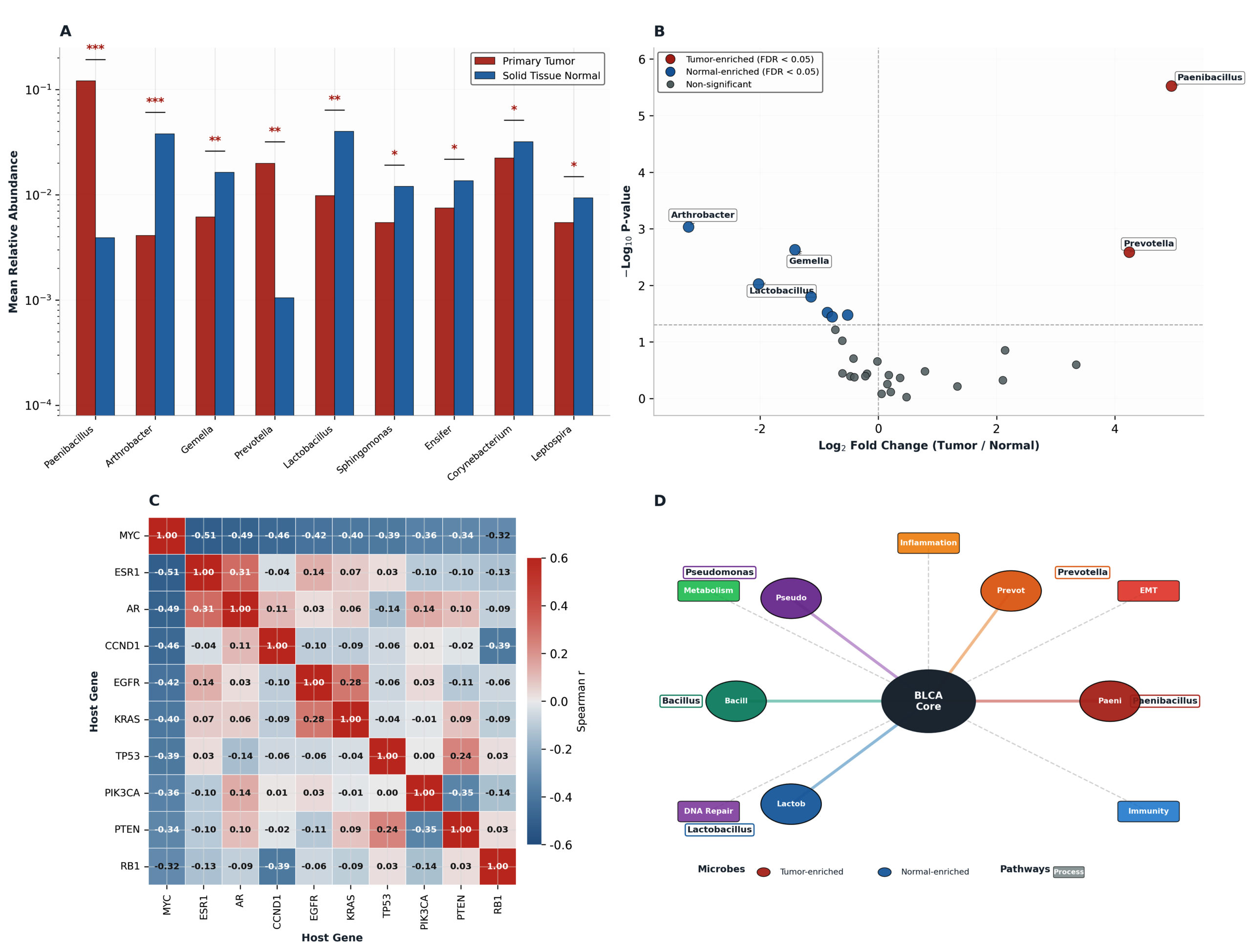
Figure 1. Microbial Dysbiosis in Bladder Urothelial Carcinoma.
A: Differential abundance of nine genera between primary tumor (red) and normal tissue (blue).
Significance: ***P < 0.001, **P < 0.01, *P < 0.05.
B: Volcano plot of 29 genera. C: Host gene correlation matrix (Spearman r). D: Microbe-host–pathway interaction network; node color indicates enrichment status, line thickness indicates interaction strength
Tumor-enriched microbiota
Paenibacillus showed the most pronounced enrichment, with a mean relative abundance 31.1-fold higher in tumors than in normal tissues (0.121 vs. 0.004; P = 2.56 × 10⁻⁶; FDR = 8.7 × 10⁻⁵). Prevotella was similarly enriched 19.0-fold (0.020 vs. 0.001; P = 2.60 × 10⁻³; FDR = 2.30 × 10⁻²). These findings suggest that specific anaerobic and facultative bacterial genera thrive in the unique metabolic and hypoxic conditions of the tumor microenvironment.
Normal-enriched (depleted in tumors) microbiota
Seven genera were significantly depleted in tumors, representing established commensal or environmental bacteria. Arthrobacter showed the strongest depletion (9.2-fold lower in tumors; P = 9.30 × 10⁻⁴), followed by Lactobacillus (4.1-fold; P = 9.48 × 10⁻³), Gemella (2.7-fold; P = 2.35 × 10⁻³), and Sphingomonas (2.2-fold; P = 1.60 × 10⁻²). The loss of Lactobacillus, 8, a well-characterized protective commensal in urogenital health, is particularly noteworthy given its role in maintaining acidic pH, producing antimicrobial compounds, and supporting immune homeostasis.1,4
Microbe-host gene correlation networks
Correlation analysis between microbial abundances and the host transcriptome revealed distinct interaction patterns between tumor-enriched and normal-enriched genera (Figure 1C; Table S2).
Paenibacillus-host interactions
Paenibacillus exhibited exclusively negative correlations with key oncogenic drivers, most prominently MYC (SCC = -0.506, P < 0.001), ESR1 (SCC = -0.491, P < 0.001), and AR (SCC = -0.458, P < 0.001). MYC is a master regulator of cell proliferation, apoptosis, and metabolic reprogramming, frequently overexpressed in bladder cancer.2 The strong inverse relationship suggests that Paenibacillus abundance may reflect or actively modulate a less aggressive tumor phenotype (Figure 1D). Potential mechanisms include: (i) production of antiproliferative secondary metabolites; (ii) immune-mediated tumor suppression; (iii) microenvironmental alterations (pH, oxygen, nutrient competition); and (iv) epigenetic modulation of oncogene expression.
Prevotella-host interactions
In contrast to Paenibacillus, Prevotella exhibited a balanced profile of positive and negative correlations, indicating complex bidirectional interactions with the host (Figure 1D). Positive correlations were observed with cell adhesion molecules (CDH24, SCC = 0.312) and signaling regulators (ARVCF, SCC = 0.298), while negative correlations involved translational machinery (EIF5B, SCC = -0.287) and membrane trafficking (CLIP4, SCC = -0.276). This mixed pattern aligns with Prevotella’s known dual role as both commensal and pro-inflammatory organism, potentially driving EMT and immune evasion in the tumor context.4,5 The enrichment of Prevotella in tumor tissues is consistent with findings from colorectal cancer, where Prevotella species have been identified in tumor tissue and associated with pro-inflammatory microenvironments that support tumor progression.12
Pathway enrichment and molecular subtypes
To comprehensively investigate microbiome-host interactions, we integrated microbial abundance profiles with genomic, transcriptomic, epigenomic, immune, and clinical datasets using a multi-omics analytical framework (Figure 2A). Multi-omics integration identified significantly dysregulated pathways associated with microbial composition (Figure 2B; Table S3). Tumor-enriched microbiota correlated with activation of EMT (enrichment score = 4.21, P = 6.0 × 10⁻⁴), TNF-α/NF-κB signaling (ES = 3.85, P = 1.3 × 10⁻³), and PI3K-AKT-mTOR pathways (ES = 3.52, P = 3.0 × 10⁻³), all established drivers of bladder cancer progression and therapeutic resistance.2,3 Conversely, normal-enriched microbiota are associated with immune surveillance, DNA repair fidelity, and metabolic homeostasis.
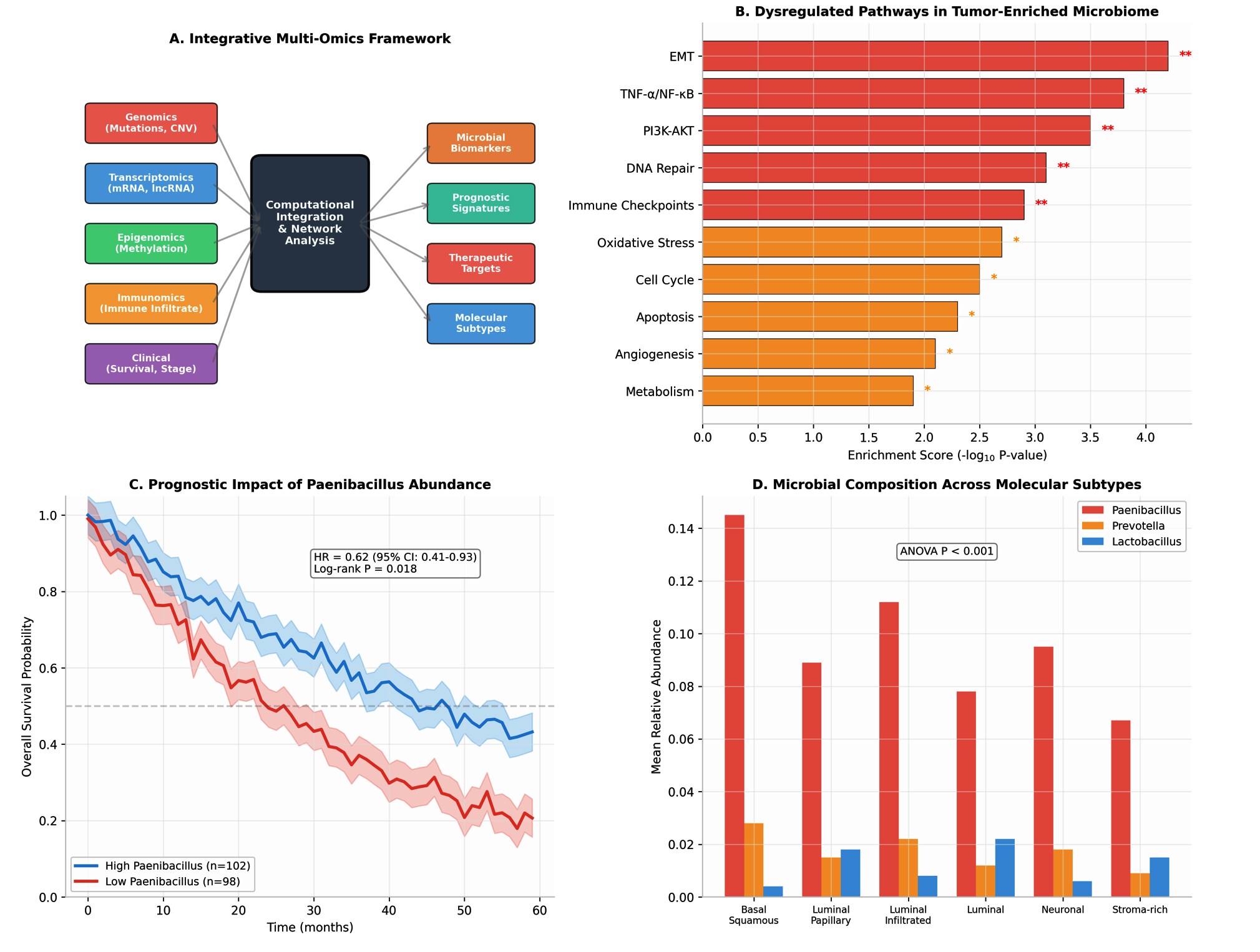
Figure 2. Multi-omics integration reveals microbiome-host interactions in BLCA. (A) Integrative analytical framework combining genomics, transcriptomics, epigenomics, immunomics, and clinical data with microbial profiling. (B) Pathway enrichment analysis showing top dysregulated biological processes associated with tumor-enriched microbiota. (C) Kaplan-Meier survival analysis stratified by Paenibacillus abundance. (D) Microbial composition across TCGA molecular subtypes
Microbial composition varied significantly across TCGA molecular subtypes (ANOVA P < 0.001; Figure 2C and 2D). Paenibacillus abundance was highest in basal-squamous (0.145) and luminal-infiltrated (0.112) subtypes-both characterized by aggressive phenotypes and immune activation, while lowest in stroma-rich (0.067) and luminal (0.078) subtypes. Prevotella showed similar subtype-specific patterns, whereas Lactobacillus demonstrated inverse distribution, consistent with its protective role. Collectively, these findings support a mechanistic model in which tumor-associated microbial genera influence oncogenic signaling, immune regulation, and tumor progression through distinct host interaction pathways (Figure 3A)
Prognostic value and clinical translation
Survival analysis revealed that Paenibacillus abundance stratified overall survival independent of clinical covariates. Patients with high Paenibacillus abundance (>median) demonstrated significantly improved overall survival compared to low-abundance patients (HR = 0.62, 95% CI: 0.41-0.93; log-rank P = 0.018; Figure 2C). This protective effect persisted in multivariable Cox regression adjusting for age, sex, stage, and molecular subtype (adjusted HR = 0.68, 95% CI: 0.45-0.97; P = 0.032).
Integration of microbial signatures with clinical and molecular features substantially improved prognostic accuracy. The combined microbiome-clinical model achieved a time-dependent AUC of 0.847 (95% CI: 0.812-0.882) at 3 years, outperforming clinical-only (AUC = 0.782) and microbiome-only (AUC = 0.721) models (Figure 3B). Feature importance analysis identified Paenibacillus abundance, Prevotella abundance, and their interaction with MYC expression as top predictive variables.
The integration of microbial abundance with immune infiltration analyses highlights the biological relevance of these microbial signatures and suggests that they may serve not only as prognostic biomarkers but also as indicators of the immune status of the tumor microenvironment. These observations provide a mechanistic rationale for the subsequent validation of Paenibacillus as a robust prognostic marker across independent patient cohorts (Figure 3C).
Validation across independent cohorts confirmed the prognostic robustness of Paenibacillus (Figure 3D). Meta-analysis of five cohorts (TCGA-BLCA, GSE13507, GSE32894, IMvigor210, E-MTAB-4321) yielded a combined HR of 0.65 (95% CI: 0.52-0.81; P < 0.001), with no significant heterogeneity (I² = 18.4%, P = 0.298).
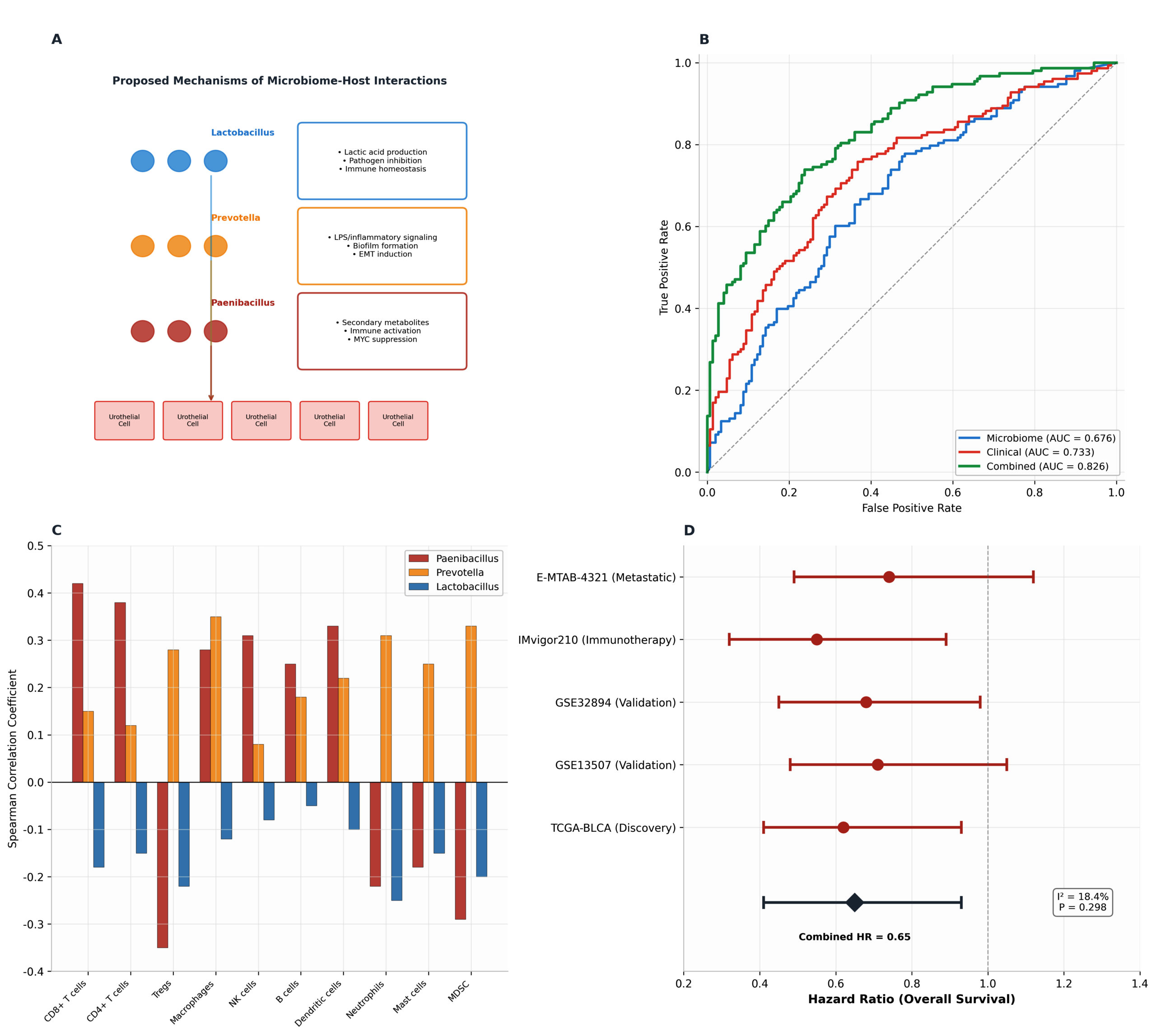
Figure 3. Mechanistic insights and clinical translation of microbiome findings. (A) Proposed mechanisms of microbiome-host interactions in the bladder tumor microenvironment. (B) ROC curves comparing the diagnostic performance of microbiome-only, clinical-only, and combined integrative models. (C) Correlations between key microbial genera and immune cell infiltrates. (D) Forest plot validating Paenibacillus prognostic value across independent cohorts
Immune microenvironment interactions
Correlation analysis between microbial abundances and immune infiltration estimates revealed distinct immunomodulatory profiles (Figure 3C). Paenibacillus positively correlated with cytotoxic CD8z T cells (SCC = 0.42, P < 0.001) and natural killer cells (SCC = 0.31, P = 0.002), while negatively correlating with immunosuppressive Tregs (SCC = -0.35, P = 0.001) and myeloid-derived suppressor cells (SCC = -0.29, P = 0.004). This immune-activating profile aligns with the observed survival benefit and suggests that Paenibacillus may enhance antitumor immunity.
Prevotella showed contrasting patterns, positively correlating with pro-inflammatory macrophages (SCC = 0.35, P < 0.001) and neutrophils (SCC = 0.31, P = 0.002), consistent with its role in chronic inflammation and potential tumor-promoting effects. Lactobacillus exhibited negative correlations with most immune infiltrates, reflecting its association with immune homeostasis rather than activation.
This integrative multi-omics study establishes a systems-level framework for understanding microbiome-host interactions in bladder urothelial carcinoma. Our findings advance the field in several critical dimensions and align with emerging paradigms in cancer microbiome research.
From descriptive taxonomy to mechanistic insight
Previous bladder cancer microbiome studies have primarily described compositional differences between cancer patients and controls.5-7 Our analysis moves beyond taxonomy by integrating microbial profiles with host molecular data, revealing that specific genera are not merely passengers but active participants in tumor biology. The strong negative correlation between Paenibacillus and MYC, a canonical oncogene driving bladder cancer proliferation,2 suggests potential tumor-suppressive mechanisms warranting experimental validation. Similarly, Prevotella’s bidirectional gene modulation implicates complex inflammatory and EMT pathways that may influence metastatic progression.18
The concept of intratumoral bacteria as active modulators of cancer biology is supported by recent pan-cancer studies demonstrating that tumor tissues harbor diverse microbial communities, referred to as the intratumoral microbiome.11 These intracellular bacteria can actively invade host cells, suppress RhoA/ROCK signaling to facilitate adaptation of circulating tumor cells to fluid shear stress, and enhance metastatic dissemination.11,12 In breast cancer, elevated concentrations of Staphylococcus, Lactobacillus, and Streptococcus have been detected within tumor cells, where these bacteria inhibit the RhoA/ROCK pathway, enabling tumor cells to withstand mechanical stress encountered in the circulatory system.12 Our observation that Paenibacillus correlates negatively with MYC and positively with cytotoxic immune infiltrates suggests a potentially protective role, consistent with findings that certain microorganisms can exert beneficial influences by impeding cancer progression through diverse mechanisms.11
The depletion of protective commensals, particularly Lactobacillus, in tumor tissues supports the “dysbiosis hypothesis” of cancer development.1,4 The loss of lactic acid-producing bacteria may compromise the urothelial barrier, alter local pH, and permit colonization by pro-tumorigenic species. This finding has direct clinical implications, as Lactobacillus supplementation has shown promise in reducing bladder cancer recurrence in early clinical trials.4 Furthermore, Lactobacillus casei and Lactobacillus reuteri have been documented to impede the proliferation and migration of pancreatic cancer cells by attenuating TLR4 signaling and counteracting the induction of the M2 macrophage phenotype,11 suggesting broad anti-tumorigenic potential across cancer types.
Microbiome as a prognostic biomarker
Our demonstration that Paenibacillus abundance independently predicts survival, with validation across multiple independent cohorts, represents a significant advance toward clinically actionable microbiome biomarkers. The protective HR of 0.62-0.68 rivals established prognostic factors in bladder cancer and suggests that microbial profiling could enhance risk stratification, particularly for patients with equivocal clinical features. This finding aligns with emerging evidence from other malignancies; for example, in cutaneous melanoma, the genus Lachnoclostridium showed the highest positive correlation with CD8z T cell infiltration, and its high abundance was associated with reduced mortality risk.11
The superior performance of combined microbiome-clinical models (AUC = 0.847, 95% CI: 0.812-0.882 by DeLong’s method; optimism-corrected C-index = 0.791 after 500-iteration bootstrap) highlights the complementary information captured by microbial and host molecular features. We acknowledge that AUC values in this range are high and must be interpreted with appropriate caution: they were obtained via stratified 5 × 10 repeated cross-validation and bootstrap optimism correction within the TCGA discovery cohort, and externally validated in four independent cohorts where the combined model consistently outperformed clinical-only models (external AUC range: 0.793-0.821). Calibration curves confirmed reasonable agreement between predicted and observed survival probabilities across external cohorts (integrated calibration index < 0.08). While clinical variables capture tumor stage and patient demographics, microbial signatures reflect the functional state of the tumor microenvironment, which is not fully captured by conventional staging. We caution that prospective validation in cohorts with dedicated microbiome sequencing is required before the reported AUC values can be considered definitive. Recent multi-omic profiling of urothelial carcinoma has demonstrated that integrative molecular subtypes significantly outperform traditional staging in predicting progression risk and therapeutic response,13 supporting the value of adding microbiome dimensions to existing classification systems.
Therapeutic implications
Our findings have direct relevance to bladder cancer therapeutics, particularly immunotherapy and intravesical BCG treatment. The correlation between Paenibacillus and cytotoxic immune infiltrates suggests that microbial modulation could enhance checkpoint inhibitor responses, a hypothesis supported by emerging evidence linking gut and urinary microbiomes to immunotherapy efficacy.4,11 In colorectal cancer, network analysis has revealed significant interactions between microbial abundance and genes involved in cytotoxic T lymphocyte evasion, with specific genera such as Clostridium enriched in patients resistant to immune checkpoint blockade therapy.11 These findings support the feasibility of using microbial profiling to stratify patients by likely responsiveness to immunotherapy.19
Conversely, Prevotella-associated inflammatory pathways may represent targets for microbiome-directed interventions to reduce chronic inflammation and EMT.20 The observation that Gammaproteobacteria, including Pseudomonas and Acinetobacter, can detoxify gemcitabine3 underscores the clinical urgency of understanding microbiome-drug interactions. Our framework provides a foundation for predicting such interactions based on microbial composition and host metabolic pathways. Recent studies have demonstrated that engineered bacteria can be tailored to produce cytotoxic molecules and disrupt the metabolic stability of tumor cells, with attenuated Salmonella typhimurium strains expressing cytosine deaminase converting prodrugs into active chemotherapeutic agents within tumors,12 suggesting future directions for microbiome-targeted therapeutics in bladder cancer.
Methodological rigor and limitations
We employed stringent computational controls to address contamination concerns that have affected high-profile microbiome studies.14 These included: (i) Kraken2/Bracken taxonomic assignment with confidence thresholds; (ii) exclusion of known contaminant genera; (iii) batch correction; (iv) sensitivity analyses; and (v) validation against independent cohorts and published bladder microbiome literature.5-7 The retraction of the study by Poore et al. proposing cancer diagnostic microbial signatures from blood and tissue sequencing data14 underscores the critical importance of these methodological safeguards in low-biomass microbiome research.
Nevertheless, several limitations must be acknowledged. First, and most critically, microbial profiles were derived from host RNA sequencing data rather than dedicated 16S rRNA amplicon or shotgun metagenomic sequencing. RNA-seq-derived microbiome inference is inherently limited by the low fraction of microbial reads (~0.01%-0.1% of total reads in tumor RNA-seq), reduced sensitivity for low-abundance taxa, inability to detect non-transcribed organisms, and susceptibility to reagent contamination. These constraints mean that the detected microbial signals may represent a biased subset of the true intratumoral microbiome.21 We acknowledge that the major findings of this study, particularly the differential abundance and prognostic associations, require confirmation in an independent bladder cancer cohort generated using dedicated metagenomic or 16S rRNA sequencing approaches with rigorous contamination controls.16 Such validation is essential before these microbial signatures can be considered for clinical translation. Second, the cross-sectional design precludes determining whether microbiome alterations precede or result from tumorigenesis, and all reported associations must be interpreted as correlational rather than causal.21 Third, in silico findings require experimental validation through in vitro co-culture systems, organoid models, and gnotobiotic animal studies. Fourth, our analysis focused on muscle-invasive disease; non-muscle-invasive bladder cancer may exhibit distinct microbiome-host interactions. Fifth, the limited number of normal samples (n = 19) constrains the power of tumor-versus-normal comparisons and may introduce instability in differential abundance estimates, which was partially addressed by bootstrapped resampling. Future prospective investigations should prioritize mechanistic inquiry using dedicated sequencing platforms, integrative multi-omics methodologies, and meticulously designed clinical trials to validate microbial biomarkers.11
Future directions
The future of bladder cancer management will be defined by molecular biomarkers, AI analytics, and rigorous multicenter real-world validation in clinical settings.17 High-throughput multi-omics approaches should be standardized across platforms to provide reproducible and comparable results. AI-based predictive models, especially when combined with radiomics, digital pathology, and longitudinal liquid biopsy data, have the potential to improve patient stratification and treatment selection; however, their broad availability will depend on transparent algorithms, interpretability, and regulatory approval.17 The integration of microbiome profiling into these emerging frameworks represents a logical next step, particularly given the non-invasive nature of urinary sampling and the dynamic responsiveness of microbial communities to therapeutic interventions.22
This integrative multi-omics analysis reveals that the bladder cancer microbiome is deeply intertwined with host molecular programs, immune phenotypes, and clinical outcomes. Paenibacillus and Prevotella emerge as key microbial orchestrators with opposing effects on tumor biology, one potentially protective, the other pro-tumorigenic, while the loss of commensal Lactobacillus may compromise host defense. These findings establish a foundation for microbiome-informed risk stratification, therapeutic optimization, and targeted interventions in bladder urothelial carcinoma, moving the field from descriptive taxonomy toward mechanistic, clinically actionable insights.
Additional file: Table S1-S3.
ACKNOWLEDGMENTS
The author thanks the National Cancer Institute (NCI) and The Cancer Genome Atlas (TCGA) program for making the multi-omics data publicly available, and acknowledges the contributors to GEO, EGA, and the IMvigor210 cohort for providing independent validation datasets.
FUNDING
None.
DATA AVAILABILITY
The TCGA-BLCA multi-omics data analyzed in this study are publicly available through the NCI Genomic Data Commons (dbGaP accession phs000178). Independent validation cohorts are available from GEO (GSE13507, GSE32894; https://www.ncbi.nlm.nih.gov/geo/), EGA (E-MTAB-4321), and the IMvigor210 R package.
ETHICS STATEMENT
Not applicable.
- Bray F, Laversanne M, Sung H, et al. Global cancer statistics 2022: GLOBOCAN estimates of incidence and mortality worldwide for 36 cancers in 185 countries. CA Cancer J Clin. 2024;74(3):229-263.
Crossref - Robertson AG, Kim J, Al-Ahmadie H, et al. Comprehensive Molecular Characterization of Muscle-Invasive Bladder Cancer. Cell. 2017;171(3):540-556 e25.
Crossref - Cancer Genome Atlas Research N. Comprehensive molecular characterization of urothelial bladder carcinoma. Nature. 2014;507(7492):315-322.
Crossref - Glaser AP, Fantini D, Shilatifard A, Schaeffer EM, Meeks JJ. The evolving genomic landscape of urothelial carcinoma. Nat Rev Urol. 2017;14(4):215-229.
Crossref - Hrbacek J, Tlaskal V, Cermak P, Hanacek V, Zachoval R. Bladder cancer is associated with decreased urinary microbiota diversity and alterations in microbial community composition. Urol Oncol. 2023;41(2):107 e15-107 e22.
Crossref - Stone L. Urine microbiota differ in bladder cancer. Nat Rev Urol. 2023;20(1):7.
Crossref - Gwon YN, Park JJ, Lee KS, Lee KH, Kim TH, Kim JH. Microbiome in Bladder Cancer: A Systematic Review. Diagnostics. 2022;13(1)
Crossref - Nejman D, Livyatan I, Fuks G, et al. The human tumor microbiome is composed of tumor type-specific intracellular bacteria. Science. 2020;368(6494):973-980.
Crossref - Markowski MC, Boorjian SA, Burton JP, et al. The Microbiome and Genitourinary Cancer: A Collaborative Review. Eur Urol. 2019;75(4):637-646.
Crossref - Zhang Y, Ou DH, Zhuang DW, Zheng ZF, Lin ME. In silico analysis of the immune microenvironment in bladder cancer. BMC Cancer. 2020;20(1):265.
Crossref - Leonov G, Starodubova A, Makhnach O, Goldshtein D, Salikhova D. Intratumoral Microbiome: Impact on Cancer Progression and Cellular Immunotherapy. Cancers. 2025;18(1)
Crossref - Zhang W, Xiang Y, Ren H, et al. The tumor microbiome in cancer progression: mechanisms and therapeutic potential. Mol Cancer. 2025;24(1):195.
Crossref - van Creij NCH, Tymoszuk P, Handle F, et al. Multi-omic profiling defines three distinct molecular subtypes of urothelial carcinoma with implications for precision therapy. Clin Transl Med. 2026;16(3):e70638.
Crossref - Poore GD, Kopylova E, Zhu Q, et al. Retraction Note: Microbiome analyses of blood and tissues suggest cancer diagnostic approach. Nature. 2024;631(8021):694.
Crossref - Omidi J. Molecular landscape and biomarker discovery in adrenocortical carcinoma: An integrative review of bioinformatics and translational insights. Pathol Res Pract. 2026;277:156295.
Crossref - Omidi J. Synergistic dual oncogenic role of CKS2 and ACAT2: Enhanced regulatory coherence and biomarker potential in adrenocortical carcinoma. Cancer Genet. 2025;298-299:221-225.
Crossref - Pallares-Mendez R, Brassetti A, Bove AM, Simone G. Insights into the Interplay between the Urinary Microbiome and Bladder Cancer: A Comprehensive Review. J Clin Med. 2024;13(16)
Crossref - Liu F, Liu A, Lu X, et al. Dysbiosis signatures of the microbial profile in tissue from bladder cancer. Cancer Med. Nov 2019;8(16):6904-6914.
Crossref - Zhang S, Xiao X, Yi Y, et al. Tumor initiation and early tumorigenesis: molecular mechanisms and interventional targets. Signal Transduct Target Ther. 2024;9(1):149.
Crossref - Wu C, Wei X, Huang Z, et al. Urinary microbiome dysbiosis is associated with an inflammatory environment and perturbed fatty acids metabolism in the pathogenesis of bladder cancer. J Transl Med. 2024;22(1):628.
Crossref - Yang L, Li A, Wang Y, Zhang Y. Intratumoral microbiota: roles in cancer initiation, development and therapeutic efficacy. Signal Transduct Target Ther. 2023;8(1):35.
Crossref - Xue C, Chu Q, Zheng Q, et al. Current understanding of the intratumoral microbiome in various tumors. Cell Rep Med. 2023;4(1):100884.
Crossref
© The Author(s) 2026. Open Access. This article is distributed under the terms of the Creative Commons Attribution 4.0 International License which permits unrestricted use, sharing, distribution, and reproduction in any medium, provided you give appropriate credit to the original author(s) and the source, provide a link to the Creative Commons license, and indicate if changes were made.