

ISSN: 0973-7510
E-ISSN: 2581-690X
 , Umang Ahlawat1, Priyanka Batra1, Lalita Singh2 and Leela Wati1
Green gram is a valuable, fast-growing pulse crop widely grown in India during both the Kharif and Summer seasons. Its strong connection with helpful soil microbes, especially endophytic bacteria, plays an important role in boosting plant growth, nodule formation, and resilience to stress. In this study, we examined how different endophytic bacteria from mungbean, used alone or in combination with standard biofertilizers, affect plant performance in greenhouse conditions during summer and Kharif. We tested 41 bacterial strains for their ability to promote plant growth and selected four of the most promising: Beijerinckia fluminensis PM1219, Pseudomonas sp. PM1220, Bacillus flexus PM1217, and Bacillus amyloliquefaciens PM1218. These were applied alone and in combination with Rhizobium MB703 and the phosphate-solubilising bacteria (PSB) P36 to assess their effects on mungbean growth. The results showed that using these bacteria together led to more nodules, higher seed yield, and greater plant weight compared to not using them. The E13 + MB703 + PSB (P36) combination gave the best results, with the highest numbers for nodules, seed yield, and plant weight, especially during Kharif, likely because of the season’s favourable humidity and temperature. Our findings suggest that using these beneficial bacteria, especially E13 with Rhizobium MB703 and PSB P36, can help farmers grow healthier, more productive mungbean crops while reducing the need for chemical fertilizers. The positive interactions between these microbes improved nutrient uptake and plant growth. This research supports the use of more microbial solutions in sustainable farming and encourages further field trials to test these benefits across different regions.
Green Gram, Endophytic Bacteria, Rhizobium, Phosphate-Solubilising Bacteria, Biofertilizers, Nodulation, Sustainable Agriculture
Mungbean (Vigna radiata) is an important short-duration crop that completes its growth cycle in about 60 days. It grows best in slightly acidic, nutrient-rich, sandy loam soils with good drainage and a pH between 6.3 and 7.2. In India, mungbeans are widely grown during the Kharif, Spring, and Summer seasons. Farmers use it for intercropping, mixed cropping, and as a sole crop, especially where irrigation is available. Mungbean is known for its high levels of quality proteins, minerals, and vitamins, making it a staple food for many people in the Indian subcontinent.1 Like other plants, mungbeans form partnerships with microorganisms to thrive in their environment. Plant growth-promoting bacteria support plant growth and help plants better withstand various stresses that can affect development.2
Endophytic bacteria are a special group that live inside plant tissues without causing harm. Unlike rhizospheric bacteria, endophytes confer significant benefits to their host plants, especially under stress. These bacteria, which are a type of plant growth-promoting rhizobacteria, can greatly increase crop productivity.3,4 They possess several beneficial traits, including phosphate solubilization, nitrogen fixation, ACC deaminase activity, antifungal effects, auxin (IAA) production, and siderophore biosynthesis.5,6
Researchers have studied how endophytic bacteria can boost crop productivity across different environments, including greenhouses, fields, and labs. However, there is still a need to understand how these bacteria affect mungbean during different seasons, especially in pot-house conditions that mimic Summer and Kharif. This study examines whether new multi-trait endophytic bacteria from mungbean are effective in pot-house conditions across both seasons. Learning how these bacteria influence mungbean growth and yield could support sustainable agriculture by reducing the need for chemical inputs and providing farmers with a practical solution across different regions.
Isolation, screening, and characterisation of bacterial endophytes
Forty-one bacterial endophytes were isolated from surface-sterilised root nodules of mungbean. They were screened for various PGP traits: HCN production, ACC utilisation, potassium solubilisation.7 The top four isolates (E6, E13, E14, and E17) were selected for their strong performance. These were characterised with biochemical tests and 16S rRNA sequencing. These isolates were identified as Beijerinckia fluminensis strain PM1219, Pseudomonas sp. strain PM1220, Bacillus flexus strain PM1217, and Bacillus amyloliquefaciens strain PM1218.8-10
Assessment of selected endophytes in pot house in summer and Kharif seasons
Endophytic cultures were inoculated to mungbean seeds individually and in combination with standard biofertilizer cultures MB-703 (Rhizobium) and P36 (phosphate solubiliser). The selected endophytic isolates were evaluated for their impact on mungbean growth in pot culture. Soil from a dry land area at Chaudhary Charan Singh Haryana Agricultural University, Hisar, was collected and analysed for total organic carbon.11 Five kilograms of soil were added to earthen pots. Diammonium phosphate (DAP) was applied at a rate of 35 kg/acre.
Mungbean variety MH-421 seeds were surface-sterilised. Inoculum (1 ml, 108 cells/ml) of bacterial cultures was applied individually and in combination with the standard biofertilizer cultures MB-703 (Rhizobium) and P36 (phosphate solubiliser). Controls included an absolute control without any inoculation (T1), addition of RDF (T2), Rhizobium strain (T3), phosphate-solubilising bacterium (PSB) strain P36 (T4), and a combination of Rhizobium strain MB-703 and PSB strain P36 (T5). Treatments ranged from individual endophytes (T6, T8) to various combinations (T7, T9).
Inclusion criteria for the experiment under pot house conditions
Nodule characteristics
At 50% flowering, plants were uprooted. Nodules were carefully counted and weighed after washing to determine both fresh and dry weights.
Plant characteristics
Plant dry weight (shoot + root) was measured at 50% flowering and at harvest. The number of seeds, pod number, and seed yield per plant were calculated at maturity.
Uptake of nutrients
Phosphorus (P) and nitrogen (N) uptake by mungbean plants were determined at harvest using standard methods.12-15
These observations aimed to measure how endophytic bacteria affect important growth factors and nutrient uptake in mungbean grown in controlled pot-house conditions that simulate the Summer and Kharif seasons.
Data analysis
GraphPad Prism version 8 software was used to analyse the study data. The significance of differences among treatments was assessed using a one-way analysis of variance (ANOVA). This included parameters like nodulation, pod and seed production, seed yield, and plant biomass accumulation. For post hoc analysis, a multiple-comparison test using Bonferroni’s method identified significant differences between treatments. All data were statistically analysed at the 95% confidence level (P < 0.05). Data are presented as mean ± standard deviation (SD) based on three replicates per treatment.
The study examined how different bacterial inoculations affected mungbean productivity during the summer and Kharif seasons under greenhouse conditions. The results showed clear differences between seasons and treatments in nodulation, pod and seed production, seed yield, and plant biomass (Tables 1 and 2).
Nodulation parameters
The best-performing treatments in both seasons were E13 + MB703 + PSB (P36) and E13 + MB703, which consistently showed the highest nodulation. In Kharif, E13 + MB703 + PSB (P36) recorded the maximum nodule number (52.00 ± 1.00), which was significantly higher than in summer (43.67 ± 1.53). Similarly, nodule fresh weight was highest in Kharif (0.36 ± 0.00 g/plant), compared to summer (0.11 ± 0.002 g/plant). Nodule dry weight followed the same pattern, with E13 + MB703 + PSB (P36) showing 0.18 ± 0.00 g/plant in Kharif and 0.05 ± 0.001 g/plant in summer. The uninoculated control always had the lowest nodulation in both seasons (Figures 1 a,b and 2 a,b).
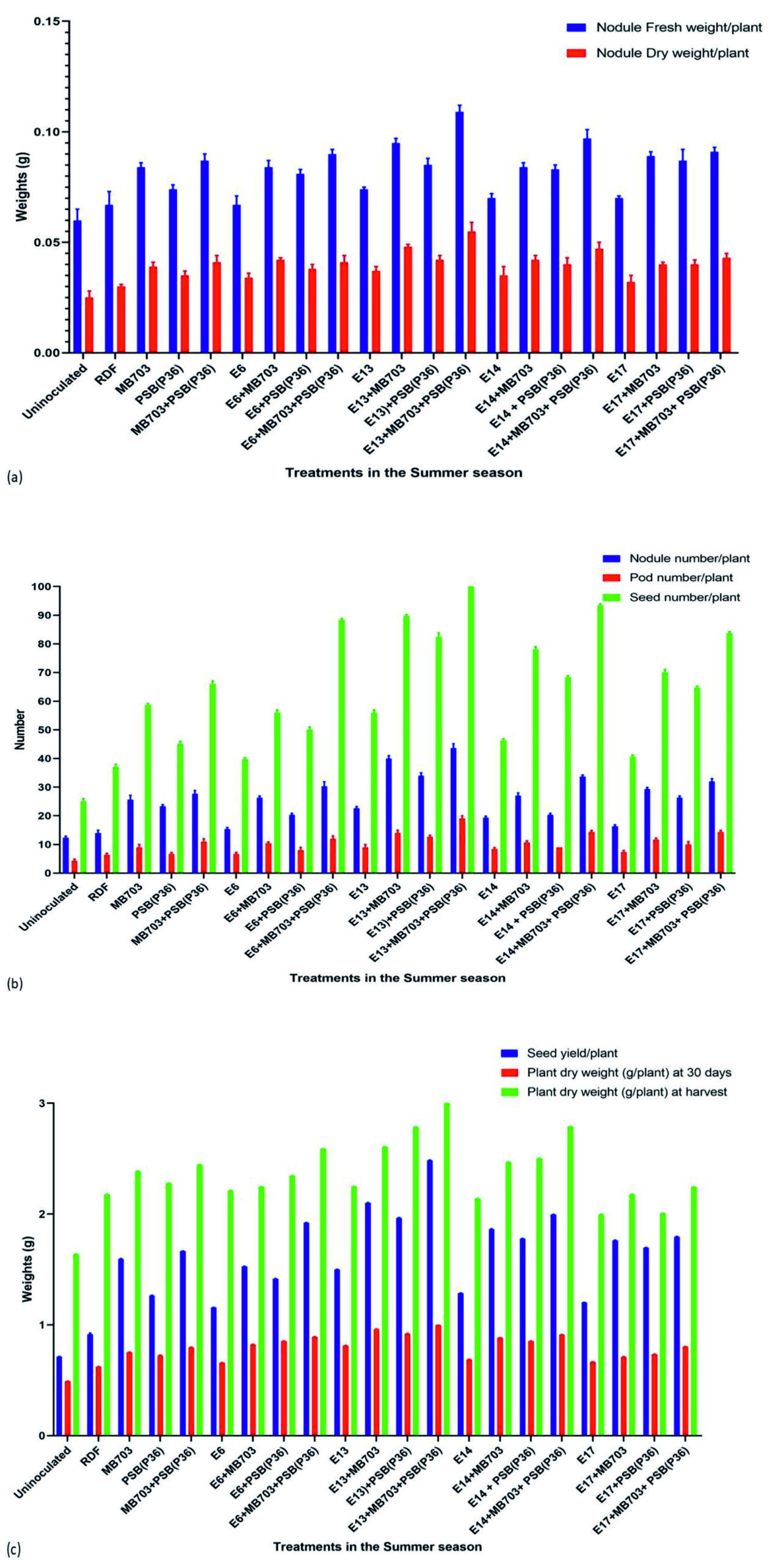
Figure 1. Effect of coinoculation with endophyte and standard biofertilizers (MB703 and P36) on nodulation (a, b), pod and seed production, seed yield, and plant dry weight of mungbean (c) under pot culture conditions during the summer season
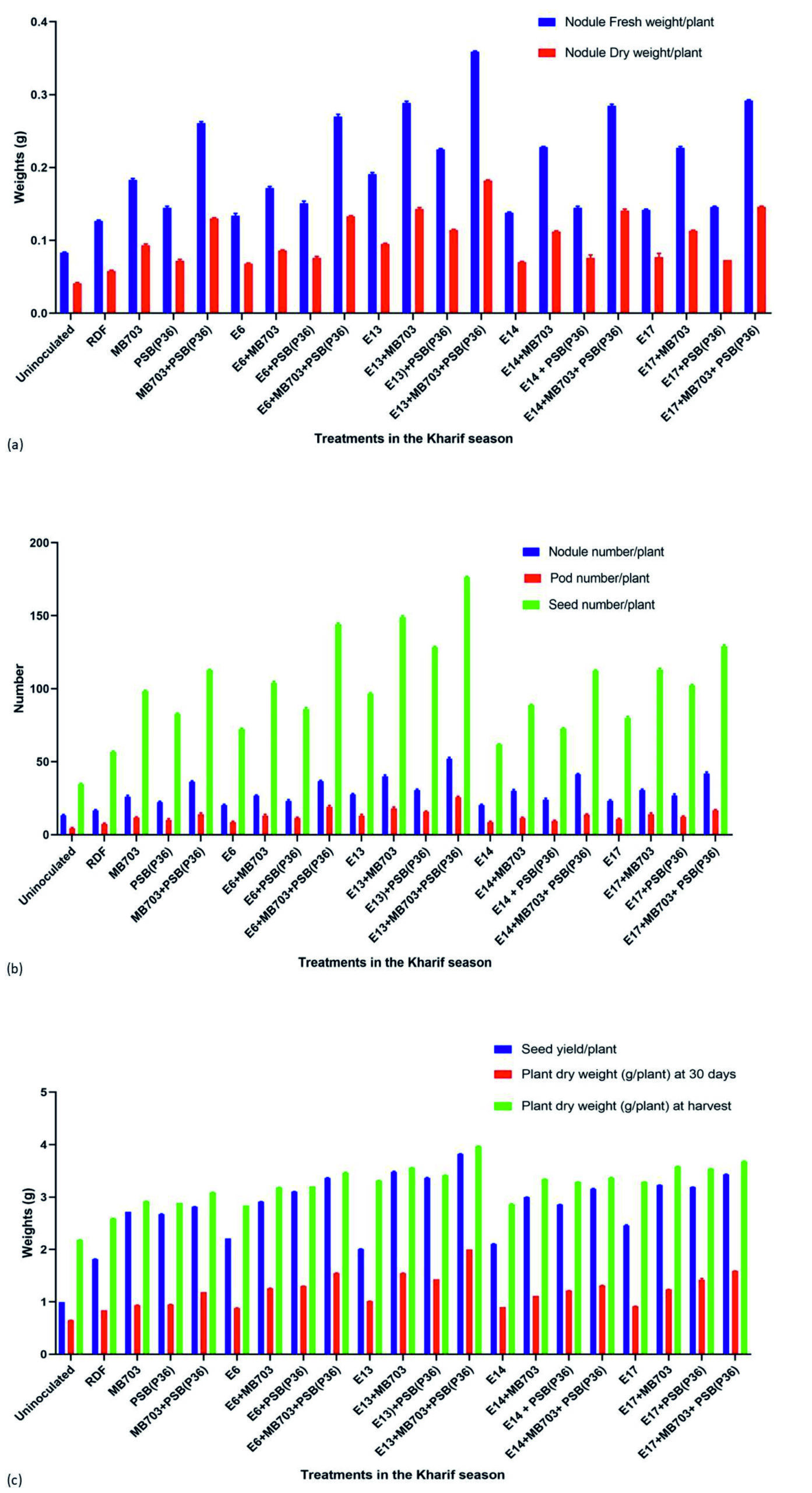
Figure 2. Effect of coinoculation with endophyte and standard biofertilizers (MB703 and P36) on nodulation (a, b), pod and seed production, seed yield, and plant dry weight (c) of mungbean under pot culture conditions during the kharif season
Pod and seed production
Pod and seed production were both higher in Kharif than in summer. The highest number of pods per plant was recorded in E13 + MB703 + PSB (P36) (25.67 ± 0.58 in Kharif and 19.00 ± 1.00 in summer). The second-best treatment, E13 + MB703, recorded 18.00 ± 1.00 pods in Kharif and 14.33 ± 0.58 in summer. The highest seed number per plant was also in E13 + MB703 + PSB (P36) (176.33 ± 0.58 in Kharif, 119.00 ± 1.00 in summer), followed by E13 + MB703 (89.67 ± 0.58 in summer, 139.00 ± 1.00 in Kharif) (Figures 1 b,c and 2 b,c and Tables 1 and 2). The lowest pod and seed numbers appeared in the uninoculated control.
Table (1): Effect of coinoculation with endophytic isolates and standard biofertilizers on nodulation, yield, and growth parameters of mungbean under pot culture conditions during the summer season
Treatment |
Nodule number/ plant |
Nodule Fresh weight/plant |
Nodule Dry weight/plant |
Pod number/plant |
Seed number/plant |
Seed yield/plant |
Plant dry weight (g/plant) at 30 days |
Plant dry weight (g/plant) at harvest |
|---|---|---|---|---|---|---|---|---|
Uninoculated |
12.33 ± 0.58 |
0.06 ± 0.01 |
0.02 ± 0.00 |
4.33 ± 0.58 |
25.00 ± 1.00 |
0.71 ± 0.00 |
0.49 ± 0.00 |
1.64 ± 0.00 |
RDF |
14.00 ± 1.00 |
0.07 ± 0.01 |
0.03 ± 0.00 |
6.33 ± 0.58 |
37.00 ± 1.00* |
0.92 ± 0.02* |
0.62 ± 0.00* |
2.18 ± 0.00* |
MB703 |
25.67 ± 1.53* |
0.08 ± 0.00* |
0.04 ± 0.00* |
9.00 ± 1.00* |
58.67 ± 0.58* |
1.60 ± 0.00* |
0.75 ± 0.00* |
2.39 ± 0.00* |
PSB (P36) |
23.33 ± 0.58* |
0.07 ± 0.00* |
0.03 ± 0.00 |
6.67 ± 0.58* |
45.00 ± 1.00* |
1.26 ± 0.00* |
0.72 ± 0.00* |
2.28 ± 0.00* |
MB703+PSB (P36) |
27.67 ± 1.15* |
0.09 ± 0.00* |
0.04 ± 0.00* |
11.00 ± 1.00* |
66.00 ± 1.00* |
1.67 ± 0.00* |
0.80 ± 0.00* |
2.45 ± 0.00* |
E6 |
15.33 ± 0.58* |
0.07 ± 0.00 |
0.03 ± 0.00 |
6.67 ± 0.58* |
39.67 ± 0.58* |
1.16 ± 0.00* |
0.66 ± 0.00* |
2.21 ± 0.00* |
E6+MB703 |
26.33 ± 0.58* |
0.08 ± 0.00* |
0.04 ± 0.00* |
10.33 ± 0.58* |
56.00 ± 1.00* |
1.53 ± 0.00* |
0.82 ± 0.00* |
2.25 ± 0.00* |
E6+PSB (P36) |
20.33 ± 0.58* |
0.08 ± 0.00* |
0.04 ± 0.00* |
8.00 ± 1.00* |
50.00 ± 1.00* |
1.42 ± 0.00* |
0.85 ± 0.00* |
2.34 ± 0.00* |
E6+MB703+PSB (P36) |
30.33 ± 1.53* |
0.09 ± 0.00* |
0.04 ± 0.00* |
12.00 ± 1.00* |
88.33 ± 0.58* |
1.92 ± 0.00* |
0.89 ± 0.00* |
2.59 ± 0.00* |
E13 |
22.67 ± 0.58* |
0.07 ± 0.00 |
0.04 ± 0.00* |
9.00 ± 1.00* |
56.00 ± 1.00* |
1.50 ± 0.00* |
0.81 ± 0.00* |
2.25 ± 0.00* |
E13+MB703 |
40.00 ± 1.00* |
0.10 ± 0.00* |
0.05 ± 0.00* |
14.00 ± 1.00* |
89.67 ± 0.58* |
2.10 ± 0.00* |
0.96 ± 0.00* |
2.61 ± 0.00* |
E13+PSB (P36) |
34.00 ± 1.00* |
0.09 ± 0.00* |
0.04 ± 0.00* |
12.67 ± 0.58* |
82.33 ± 1.53* |
1.97 ± 0.00* |
0.92 ± 0.00* |
2.79 ± 0.00* |
E13+MB703+PSB (P36) |
43.67 ± 1.53* |
0.11 ± 0.00* |
0.05 ± 0.00* |
19.00 ± 1.00* |
119.00 ± 1.00* |
2.49 ± 0.01* |
1.00 ± 0.00* |
3.07 ± 0.00* |
E14 |
19.33 ± 0.58* |
0.07 ± 0.00 |
0.04 ± 0.00* |
8.33 ± 0.58* |
46.33 ± 0.58* |
1.29 ± 0.00* |
0.69 ± 0.00* |
2.14 ± 0.00* |
E14+MB703 |
27.00 ± 1.00* |
0.08 ± 0.00* |
0.04 ± 0.00* |
10.67 ± 0.58* |
78.00 ± 1.00* |
1.87 ± 0.00* |
0.88 ± 0.00* |
2.47 ± 0.00* |
E14+PSB (P36) |
20.33 ± 0.58* |
0.08 ± 0.00* |
0.04 ± 0.00* |
9.00 ± 0.00* |
68.33 ± 0.58* |
1.78 ± 0.00* |
0.85 ± 0.00* |
2.50 ± 0.00* |
E14+MB703+PSB (P36) |
33.67 ± 0.58* |
0.10 ± 0.00* |
0.05 ± 0.00* |
14.33 ± 0.58* |
93.33 ± 0.58* |
2.00 ± 0.00* |
0.91 ± 0.00* |
2.79 ± 0.00* |
E17 |
16.33 ± 0.58* |
0.07 ± 0.00 |
0.03 ± 0.00 |
7.33 ± 0.58* |
40.67 ± 0.58* |
1.20 ± 0.00* |
0.66 ± 0.00* |
2.00 ± 0.00* |
E17+MB703 |
29.33 ± 0.58* |
0.09 ± 0.00* |
0.04 ± 0.00* |
11.67 ± 0.58* |
70.00 ± 1.00* |
1.76 ± 0.00* |
0.71 ± 0.00* |
2.18 ± 0.00* |
E17+PSB (P36) |
26.33 ± 0.58* |
0.09 ± 0.00* |
0.04 ± 0.00* |
10.00 ± 1.00* |
64.67 ± 0.58* |
1.70 ± 0.00* |
0.73 ± 0.00* |
2.01 ± 0.00* |
E17+MB703+PSB (P36) |
32.00 ± 1.00* |
0.09 ± 0.00* |
0.04 ± 0.00* |
14.33 ± 0.58* |
83.67 ± 0.58* |
1.80 ± 0.00* |
0.80 ± 0.00* |
2.25 ± 0.00* |
Table (2): Effect of coinoculation with endophytic isolates and standard biofertilizers on nodulation, yield, and growth parameters of mungbean under pot culture conditions during the Kharif season
Treatment |
Nodule number/plant |
Nodule Fresh weight/plant |
Nodule Dry weight/plant |
Pod number/plant |
Seed number/plant |
Seed yield/plant |
Plant dry weight (g/plant) at 30 days |
Plant dry weight (g/plant) at harvest |
|---|---|---|---|---|---|---|---|---|
Uninoculated |
13.33 ± 0.58 |
0.08 ± 0.00 |
0.04 ± 0.00 |
4.33 ± 0.58 |
34.67 ± 0.58 |
1.00 ± 0.00 |
0.65 ± 0.00 |
2.18 ± 0.00 |
RDF |
16.67 ± 0.58* |
0.13 ± 0.00* |
0.06 ± 0.00* |
7.33 ± 0.58* |
56.67 ± 0.58* |
1.82 ± 0.00* |
0.84 ± 0.00* |
2.59 ± 0.00* |
MB703 |
26.00 ± 1.00* |
0.18 ± 0.00* |
0.09 ± 0.00* |
11.67 ± 0.58* |
98.33 ± 0.58* |
2.72 ± 0.00* |
0.94 ± 0.00* |
2.92 ± 0.00* |
PSB (P36) |
22.33 ± 0.58* |
0.14 ± 0.00* |
0.07 ± 0.00* |
10.00 ± 1.00* |
82.67 ± 0.58* |
2.68 ± 0.00* |
0.95 ± 0.00* |
2.89 ± 0.00* |
MB703+PSB (P36) |
36.33 ± 0.58* |
0.26 ± 0.00* |
0.13 ± 0.00* |
14.00 ± 1.00* |
112.67 ± 0.58* |
2.82 ± 0.00* |
1.19 ± 0.00* |
3.09 ± 0.00* |
E6 |
20.33 ± 0.58* |
0.13 ± 0.00* |
0.07 ± 0.00* |
8.67 ± 0.58* |
72.33 ± 0.58* |
2.21 ± 0.00* |
0.88 ± 0.00* |
2.84 ± 0.00* |
E6+MB703 |
26.67 ± 0.58* |
0.17 ± 0.00* |
0.09 ± 0.00* |
13.00 ± 1.00* |
104.00 ± 1.00* |
2.91 ± 0.00* |
1.26 ± 0.00* |
3.18 ± 0.00* |
E6+PSB (P36) |
23.00 ± 1.00* |
0.15 ± 0.00* |
0.08 ± 0.00* |
11.33 ± 0.58* |
86.00 ± 1.00* |
3.10 ± 0.00* |
1.30 ± 0.00* |
3.20 ± 0.00* |
E6+MB703+PSB (P36) |
36.67 ± 0.58* |
0.27 ± 0.00* |
0.13 ± 0.00* |
19.00 ± 1.00* |
144.00 ± 1.00* |
3.36 ± 0.01* |
1.55 ± 0.00* |
3.46 ± 0.01* |
E13 |
27.67 ± 0.58* |
0.19 ± 0.00* |
0.10 ± 0.00* |
13.00 ± 1.00* |
96.67 ± 0.58* |
2.01 ± 0.00* |
1.01 ± 0.00* |
3.31 ± 0.00* |
E13+MB703 |
40.00 ± 1.00* |
0.29 ± 0.00* |
0.14 ± 0.00* |
18.00 ± 1.00* |
149.00 ± 1.00* |
3.48 ± 0.01* |
1.55 ± 0.00* |
3.56 ± 0.00* |
E13+PSB (P36) |
30.67 ± 0.58* |
0.23 ± 0.00* |
0.11 ± 0.00* |
15.67 ± 0.58* |
128.33 ± 0.58* |
3.37 ± 0.01* |
1.43 ± 0.00* |
3.42 ± 0.00* |
E13+MB703+PSB (P36) |
52.00 ± 1.00* |
0.36 ± 0.00* |
0.18 ± 0.00* |
25.67 ± 0.58* |
176.33 ± 0.58* |
3.82 ± 0.00* |
2.00 ± 0.00* |
3.97 ± 0.00* |
E14 |
20.33 ± 0.58* |
0.14 ± 0.00* |
0.07 ± 0.00* |
8.67 ± 0.58* |
61.67 ± 0.58* |
2.11 ± 0.00* |
0.90 ± 0.00* |
2.86 ± 0.01* |
E14+MB703 |
30.00 ± 1.00* |
0.23 ± 0.00* |
0.11 ± 0.00* |
11.33 ± 0.58* |
88.67 ± 0.58* |
3.00 ± 0.00* |
1.11 ± 0.00* |
3.34 ± 0.00* |
E14+PSB (P36) |
24.00 ± 1.00* |
0.14 ± 0.00* |
0.08 ± 0.00* |
9.33 ± 0.58* |
72.67 ± 0.58* |
2.86 ± 0.00* |
1.21 ± 0.00* |
3.29 ± 0.00* |
E14+MB703+PSB (P36) |
41.33 ± 0.58* |
0.28 ± 0.00* |
0.14 ± 0.00* |
13.67 ± 0.58* |
112.33 ± 0.58* |
3.16 ± 0.01* |
1.31 ± 0.00* |
3.37 ± 0.01* |
E17 |
23.33 ± 0.58* |
0.14 ± 0.00* |
0.08 ± 0.00* |
10.67 ± 0.58* |
80.00 ± 1.00* |
2.46 ± 0.01* |
0.92 ± 0.00* |
3.29 ± 0.00* |
E17+MB703 |
30.67 ± 0.58* |
0.23 ± 0.00* |
0.11 ± 0.00* |
14.00 ± 1.00* |
113.00 ± 1.00* |
3.23 ± 0.00* |
1.24 ± 0.00* |
3.58 ± 0.00* |
E17+PSB (P36) |
27.00 ± 1.00* |
0.15 ± 0.00* |
0.07 ± 0.00* |
12.33 ± 0.58* |
102.33 ± 0.58* |
3.19 ± 0.00* |
1.42 ± 0.03* |
3.54 ± 0.00* |
E17+MB703+PSB (P36) |
42.00 ± 1.00* |
0.29 ± 0.00* |
0.15 ± 0.00* |
16.67 ± 0.58* |
129.00 ± 1.00* |
3.43 ± 0.00* |
1.59 ± 0.00* |
3.68 ± 0.01* |
Seed yield and plant biomass
The highest seed yield came from E13 + MB703 + PSB (P36) (3.82 ± 0.00 g/plant in Kharif, 2.49 ± 0.01 g/plant in summer). The next highest was E13 + MB703 (3.48 ± 0.01 g/plant in Kharif, 2.10 ± 0.001 g/plant in summer). The uninoculated control had the lowest yield in both seasons (1.00 ± 0.00 g/plant in Kharif, 0.71 ± 0.001 g/plant in summer) (Figures 1 b,c and 2 b,c).
Plant dry weight at 30 days was highest in E13 + MB703 + PSB (P36) (2.00 ± 0.00 g/plant in Kharif, 1.00 ± 0.001 g/plant in summer). At harvest, the same treatment recorded the maximum plant dry weight (3.97 ± 0.00 g/plant in Kharif, 3.07 ± 0.001 g/plant in summer). The uninoculated control consistently had the lowest dry weight (Figures 1c and 2c).
Overall comparison
E13 + MB703 + PSB (P36) and E13 + MB703 were the top treatments in both seasons, performing much better than the others. Productivity was higher during the Kharif season across all measures, likely due to better environmental conditions. These results show the promise of biofertilizers, especially the E13 + MB703 + PSB (P36) combination, for improving mungbean growth and yield (Figures 1 a,b,c and 2 a,b,c).
Microbial inoculation plays a crucial part in long-term growth, as highlighted by Hassen et al.16 In this study, four promising non-rhizobial endophytic isolates (E17, E14, E13 and E6) exhibiting multiple PGP traits were selected.17 Inoculation with these bacterial isolates has resulted in significant increases in various growth parameters and yield attributes of mungbean during both Kharif and summer seasons under greenhouse conditions.18,19 Notably, nodulation efficiency and seed yield were significantly enhanced when non-rhizobial endophyte E13, with multiple plant growth-promoting traits, was co-inoculated with Rhizobium MB703 and phosphate biofertilizer P36.20 These findings align with those of Hu et al.,21 who demonstrated the positive impact of endophytic strains on nodulation, nodule weight, grain yield, and nutrient uptake, particularly nitrogen and phosphorus.
The superior performance of the E13 + MB703 + PSB (P36) treatment in both seasons, compared to other inoculation strategies, emphasises the synergistic effects of bacterial co-inoculation.22 Coinoculation significantly improved the number and weight of nodules, seed yield, and biomass accumulation, reinforcing the role of biofertilizers in enhancing plant productivity.23,24 The highest seed yield recorded in Kharif (3.82 ± 0.00 g/plant) and summer (2.49 ± 0.01 g/plant) under E13 + MB703 + PSB (P36) indicates that the co-inoculation strategy is beneficial across varying climatic conditions.
Endophyte E13 showed higher plant dry weight across multiple growth stages, underscoring its potential to enhance overall biomass production in mungbean. Coinoculation with Rhizobium MB703 and phosphate solubiliser P36 resulted in maximum plant dry weight, nitrogen, and phosphorus uptake after harvest, supporting findings from previous studies,25,26 which highlighted the beneficial effects of microbial consortia on plant growth and nutrient assimilation.
Interestingly, the study observed seasonal variations in the effectiveness of microbial inoculations.27 During the Kharif season, nodulation, plant dry weight, seed yield, and nutrient uptake were significantly superior to those in the summer season. This observation aligns with Aguilar et al.28 and Biyani29, who attributed the improved performance of Kharif mungbean to favourable climatic conditions, reduced abiotic stress, and enhanced survival of bioinoculants. These seasonal differences underscore the importance of optimising microbial inoculant formulations and application strategies to match environmental conditions.
This study shows that endophytic bacteria can be effective biofertilizers for improving mungbean productivity in seasonal pot-house cultivation. Of all the treatments tested, E13 + MB703 + PSB (P36) and E13 + MB703 were the most successful at increasing nodulation, pod and seed production, seed yield, and biomass. These findings support the value of using microbial consortia in sustainable agriculture. Mungbean plants treated with E13 + MB703 + PSB (P36) consistently had higher yields in both summer and Kharif seasons. The better results in Kharif suggest that environmental factors affect how well microbial inoculations work, highlighting the need to adapt strategies to the season. The combined effects of rhizobial, non-rhizobial, and phosphate-solubilising bacteria in this study suggest the potential to develop highly efficient biofertilizers. More field trials are needed to test these microbial consortia in real-world farming and to check their long-term benefits.
ACKNOWLEDGMENTS
The authors would like to acknowledge the Department of Microbiology, College of Basic Science and Humanities, Chaudhary Charan Singh Haryana Agricultural University, Hisar, Haryana, India, for their constant support in carrying out this work.
CONFLICT OF INTEREST
The authors declare that there is no conflict of interest.
AUTHORS’ CONTRIBUTION
All authors listed have made a substantial, direct and intellectual contribution to the work, and approved it for publication.
FUNDING
None.
DATA AVAILABILITY
All datasets generated or analysed during this study are included in the manuscript.
ETHICS STATEMENT
This article does not contain any studies on human participants or animals performed by any of the authors.
- Samanta I, Tarafdar S, Sahoo SS, Saha S, Mohanty S, Chowdhary G. Vigna radiata: A minor legume with major potential. In: Mathur, P, Gupta A, eds. Recent trends and applications of leguminous microgreens as functional foods. Cham: Springer Nature Switzerland.
Crossref - Riseh RS, Fathi F, Vazvani MG, Tarkka MT. Plant colonization by biocontrol bacteria and improved plant health: a review. Front. Biosci. (Landmark Ed, 2025;30(1):23223.
Crossref - Tariq A, Tanvir A, Barasarathi J, Alsohim AS, Mastinu A, Sayyed R, Nazir A. Endophytes: key role players for sustainable agriculture: mechanisms, omics insights and future prospects. Plant Growth Regul. 2025;105(6):1969:1990
Crossref - Newman JA, Hager HA. Endophytes unveiled. In: Gibson DJ, Newman JA, eds. Routledge Handbook of Grasslands. Routledge; 2026:124-147. doi: 10.4324/9781003394969-11
- Hnini M, Aurag J. Prevalence, diversity and applications potential of nodules endophytic bacteria: a systematic review. Front. Microbiol. 2024;15;1386742.
Crossref - Shahzad M, Hayat R, Mujtaba G, Rehman WU, Nadeem M. Biofertilizers in sustainable agriculture: mechanisms, applications, and future prospects. Discover Agri. 2025;3(1);224.
Crossref - Sansanwal R, Ahlawat U, Batra P, Wati L. Isolation and evaluation of multi-trait novel bacterial endophytes from root nodules of mungbean (Vigna radiata). Int J Curr Microbiol App Sci. 2018;7;2424–2430.
Crossref - da Silva Pinto LF, Tavares TCS, Cardenas-Alegria OV, Lobato EMSG, de Sousa CP, Nunes ARC. Endophytic Bacteria with Potential Antimicrobial Activity Isolated from Theobroma cacao in Brazilian Amazon. Microorganisms. 2025;13(7);1686.
Crossref - Padnekar SG, Baing SG, Kocharekar AM. A review on the isolation techniques and functional role of microbial endophytes from medicinal plants of India. J Plant Pathol Microbiol. 2025;5(1);95-104.
Crossref - Sansanwal R, Ahlawat U, Batra P, Wati L, Kaushik P. Biochemical and Molecular Characterization of Endophytic Bacteria from Root Nodules of Mungbean (Vigna radiata). 2023. Ann Biol. 2023;39(1);7–10.
- Parvej MR, Brandt D, Myers R, Nelson K, Singh G, Reinbott T. Soil organic carbon: a foundational indicator of soil health. University of Missouri Extension; 2025. Publication G9071. https://extension.missouri.edu/publications/g9071
- Bremner JM. Determination of nitrogen in soil by the Kjeldahl method. J Agri. Sci. 1960;55(01);11-33.
Crossref - John MK. Colorimetric determination of phosphorus in soil and plant materials with ascorbic acid. Soil Sci. 1970;109(4):214–220.
- Liang M, Wu Y, Jiang Y, et al. Microbial functional genes play crucial roles in enhancing soil nutrient availability of halophyte rhizospheres in salinized grasslands. Sci Total Environ. 2025;958;178160.
Crossref - Thaqi SK, Siani R, Chiba A, et al. Effects of novel P fertilizers on microbial abundance related to N and P cycling in two on-farm systems. Agric Ecosyst Environ. 2025;385:109565.
Crossref - Hassen AI, Muema EK, Diale MO, Mpai T, Bopape FL. Non-Rhizobial Endophytes (NREs) of the Nodule Microbiome Have Synergistic Roles in Beneficial Tripartite Plant–Microbe Interactions. Microorganisms. 2025;13(3);518.
Crossref - Rajesh S, Anilkumar M. Isolation and identification of plant growth-promoting endophytic bacteria from Eclipta prostrata (L.) L. and its metagenomic evidence through functional annotation. The Microbe. 2026;11:100698.
Crossref - Sansanwal R. Evaluation of Bacterial Nodule Endophytes and their Individual Inoculation and Coinoculation Effect on Growth and Yield of Mungbean. Res J Agri. Sci. 2018;9;204–206.
- Garg D, Kumari S, Sharma P, Pathania N. Screening for the biocontrol and plant growth promoting activities of rhizospheric and endophytic isolates from mungbean. J Biol Control. 2025;39(4).
Crossref - Gamalero E, Glick BR. Rhizobia and non-rhizobial nodule bacteria with ACC deaminase increase both nodulation and stress resistance. Front. Microbiol. 2025;16:1662592.
Crossref - Hu D, Zhang S, Chen M, Cui P, Jiang Y, Han Y, Wang Y. Prioritizing root endophytes: maize genotype and nitrogen interaction shape microbial contributions to nitrogen use efficiency. Plant Soil. 2026;518(2);1685-1700.
Crossref - Devi R, Kaur T, Negi R, et al. Microbes mediated nutrient dynamics for plant growth promotion: current research and future challenges. Indian J Microbiol. 2025;65(2);866-889.
Crossref - Habibi S, Seerat AY, Aryan S, et al. The genetic diversity, symbiotic efficiency, and drought resilience of rhizobia associated with mung bean in central and northern regions of Afghanistan. World J Microbiol Biotech. 2026;42(1);27.
Crossref - Chandana M, Kada Siddappa MM, Neelima TL, Sathyanarayana E. Effect of phosphate rich organic manure (prom) and bio-inoculants on growth attributes of Rabi blackgram (Vigna mungo L.). Int Res Agron, 2025;8(9);485-489.
Crossref - Sowmya NSL, Rupesh P, Rajeev, Saini L, Upadhyay H. Effect of different bio-inoculants with varied levels of phosphorus on growth and yield attributes of Chickpea (Cicer arietinum L). Ann Agri Bio Res. 2024;29(1);76-82
- Batra P, Barkodia M, Ahlawat U, Sansanwal R, Vaid RK, Wati L. Identification and characterization of promising endophytic bacteria for growth promotion in chickpea (Cicer arietinum). Indian J Agri Sci. 2020;90(4);708– 712.
Crossref - Ali MA, Ahmed T, Ibrahim E, Rizwan M, Chong KP, Yong JWH. A review on mechanisms and prospects of endophytic bacteria in biocontrol of plant pathogenic fungi and their plant growth-promoting activities. Heliyon. 2024;10(11).
Crossref - Aguilar CH, Pires D, Cortaga C, et al. Harnessing Legume Productivity in Tropical Farming Systems by Addressing Challenges Posed by Legume Diseases. Nitrogen. 2025;6(3);65.
Crossref - Biyani SC. Studies on the reproductive performance and yield pattern of mungbean and urdbean in the context of changing weather conditions at Agra [PhD thesis]. Dayalbagh Educational Institute; 2014. https://shodhganga.inflibnet.ac.in/handle/10603/17897
© The Author(s) 2026. Open Access. This article is distributed under the terms of the Creative Commons Attribution 4.0 International License which permits unrestricted use, sharing, distribution, and reproduction in any medium, provided you give appropriate credit to the original author(s) and the source, provide a link to the Creative Commons license, and indicate if changes were made.