

ISSN: 0973-7510
E-ISSN: 2581-690X
 , Hassan Habib Hassan Ashraa Kalee2, Mohammad Feizal Daud3 and Salisa Suchitwarasan1
 Arbuscular mycorrhizal fungi (AMF) can be used as microbial fertilizers. Hydroponic cultivation offers significant advantages by reducing factors that cause damage during traditional soil-based cultivation. Furthermore, mycorrhiza helper bacteria (MHB) can improve mycorrhizal fungal colonization. The objective of this study was to examine the function of Funneliformis mosseae in promoting rice growth under soilless culture using a hydroponic cultivation system with two different levels of nutrient supply: A and B (high and low levels). Furthermore, Bacillus methylotrophicus was isolated from Funneliformis mosseae spores to examine its potential to promote rice growth in combination with AMF. The findings illustrated that three-month-old rice plants at the ripening stage inoculated with Funneliformis mosseae showed the highest increases in height, fresh weight of leaves and roots, and dry root weight under low levels of nutrient supply, with successful AMF root colonization of 78.67%. Additionally, co-cultivation of Funneliformis mosseae and Bacillus methylotrophicus significantly enhanced plant height, fresh weight of leaves and roots, and dry root weight under low levels of nutrient supply compared to uninoculated plants under high levels of nutrient supply. High levels of nutrient supply significantly decreased Funneliformis mosseae colonization of rice roots. These findings suggest that optimal levels of nutrient supply are necessary for rice growth with AMF colonization because high nutrient supply restricts plant growth and reduces AMF root colonization. However, Bacillus methylotrophicus did not demonstrate a strong relationship with AMF colonization. Based on these findings, AMF can be applied to hydroponic cultivation systems. Nevertheless, the MHB-AMF relationship should be studied further.
Arbuscular Mycorrhizal Fungi, Funneliformis mosseae, Rice, Hydroponic Cultivation System, Mycorrhiza Helper Bacteria, Nutrient Solutions (NS)
Arbuscular mycorrhizal fungi (AMF) are a class of soil fungi that have been thoroughly investigated for their ability to improve plant development in several ways. They improve nutrient absorption even in soils with limited nutrient availability,1 confer plant defense mechanisms,2 and synthesize compounds that function similarly to plant hormones, which are crucial for plant development and growth.3 AMF are obligatory plant root symbionts that establish symbiotic relationships with a diverse range of host plants.4 Their hosts comprise approximately 80% of all land-based plant species.5,6 AMF are known to be beneficial in soil-based crops; however, their effects on plants cultivated in soilless systems remain less understood.7 Recently, soilless cultivation within greenhouses has emerged as a predominant approach for improving productivity by enabling precise control over environmental and nutrient factors, while simultaneously reducing water consumption.
Hydroponic systems are agricultural methods used for cultivating plants using nutrient-rich solutions in soilless environments. Hydroponic farming enhances the efficiency of fertilizer and water use, boosts crop productivity, and improves crop quality. The use of fewer chemical fertilizers when growing vegetables hydroponically by incorporating AMF has led to various beneficial outcomes. Apart from reducing the reliance on chemical fertilizers, plants can efficiently utilize nutrients in water, resulting in equivalent or improved crop quality. Moreover, the wastewater from hydroponic cultivation contains fewer inorganic substances, making it more environmentally friendly. Hydroponic cultivation, being soilless, allows for cleaner root systems that can host AMF more effectively than soil-based cultivation.8 The commercial production of AMF remains unpopular because of the challenging production process, which is often complicated by contamination from various soil factors. However, hydroponics-based AMF production can mitigate these issues. A significant challenge in using AMF is ensuring long-term survival and colonization of plant roots.
The group of beneficial bacteria that stimulate the establishment, development, and efficiency of mycorrhizal symbiotic relationships is known as mycorrhiza helper bacteria (MHB). The concept of MHB has since expanded to include interactions with other major mycorrhizal types, including arbuscular mycorrhizal fungi (AMF) and orchid mycorrhizal fungi (OMF).9 These bacteria typically inhabit the mycorrhizosphere, which is directly influenced by the combined activity of plant roots and mycorrhizal fungal hyphae, where biochemical signaling and nutrient exchange shape tripartite plant-fungus-bacterium interactions. Therefore, integrating mycorrhiza helper bacteria can enhance root colonization, potentially yielding higher quantities of suitable AMF inocula for commercial purposes and ensuring quality in future studies.
MHB can enhance mycorrhizal formation and function through several mechanisms10: (i) increasing root receptivity to fungal colonization; (ii) facilitating recognition between fungal propagules and plant roots; (iii) stimulating fungal growth, including spore germination and hyphal branching; (iv) modifying soil physicochemical properties in ways that favor mycorrhizal establishment; and (v) enhancing germination of fungal propagules. Many MHB also produce phytohormones (e.g., auxins) that promote lateral root formation or alter root exudate profiles, indirectly improving fungal infection sites.9 In addition, MHB frequently solubilizes phosphorus, fixes atmospheric nitrogen, and releases siderophores that increase iron availability, thereby improving nutrient acquisition by both fungi and plants.11
KDML105 (Khao Dawk Mali 105) is a variety of Thai jasmine rice that can be cultivated throughout the country. KDML105 is known for its soft texture after cooking, long slender white grains, and a distinctive jasmine-like aroma.12 Thailand has long been an agricultural society, with rice cultivation playing a central role in the country’s agriculture. Rice is one of the most important nourishment and sustenance foods consumed by approximately half of the world’s population,13 and Thailand is capable of cultivating rice in all regions. Rice is also a critical economic crop that contributes significantly to national income through exports. However, rice farming involves substantial costs for farmers, including expenditures on chemical fertilizers, herbicides, and pesticides, which have continuously increased production costs.14 This study focused on investigating the propagation of arbuscular mycorrhizal fungi (AMF) using a hydroponic cultivation system to identify and classify associated mycorrhiza helper bacteria (MHB) and assess the synergistic effects of AMF-MHB interactions on enhancing plant development under high and low levels of nutrient supply.
Plant and fungus used, and experimental parameters
Thai jasmine rice variety Khao Dawk Mali 105 (Oryza sativa L. KDML105) was used in this experiment. The rice seeds were surface-sterilized and washed with 6% (w/v) NaOCl and sterile water. Seeds were germinated on wet sterilized tissue paper, and germinated seedlings were selected and then transferred to a hydroponic growth box with 18 holes.
The mycorrhizal inoculum was a mixture of Funneliformis mosseae spores in soil, consisting of 40 spores g-1.
The experiment was conducted in a glasshouse within the hydroponic system sector at Kasetsart University, Bangkok, Thailand. A Deep Flow Technique (DFT) was used for the hydroponic system. The hydroponic nutrient solution was prepared by mixing two stock solutions, nutrient solution A (NSa) and nutrient solution B (NSb). NSa contained MgSO4 50 g L-1, KNO3 80 g L-1, (NH4)2 HPO4 12.5 g L-1, and KH2PO4 8.5 g L-1, while NSb contained Ca(NO3)2 100 g L-1 and Fe-EDTA 3 g L-1. The appropriate volumes of NSa and NSb were mixed with water to prepare the final hydroponic nutrient solution. Two nutrient supply levels were subsequently established by varying the amount of nutrient solution B added: NS1 (high nutrient supply) and NS2 (low nutrient supply). The pH of the nutrient solutions was pH 6.0.
Isolation, purification, and molecular identification of mycorrhiza helper bacteria from Funneliformis mosseae spores
Single-spore isolation of Funneliformis mosseae from the mycorrhiza inoculum for the purpose of selecting mycorrhiza helper bacteria (MHB) was carried out using the wet sieving and decanting technique15 with sucrose centrifugation.16 For microscopic examination, a single spore of Funneliformis mosseae was collected and placed on nutrient agar (NA) medium. Cultures were incubated for 48 hrs before the cross-streak technique was used to isolate single bacterial colonies. Morphological traits of each bacterial isolate were investigated using a microscope. Bacteria were screened based on Gram staining and the frequency of occurrence across all experimental replicates. Additional selection criteria included the ability to produce slime (an extracellular polysaccharide). The selected isolates were used for further experimental analyses.
For bacterial identification by Sanger sequencing, genomic DNA was extracted from all bacterial isolates. The 16S rRNA gene from the isolated DNA was amplified by Polymerase Chain Reaction (PCR) using bacterial universal primers 27F (5′-AGAGTTTGATCMTGGCTCAG-3′) and 1492R (5′-GGTTACCTTGTTACGACTT-3′). PCR was performed using 2X PCR Master Mix Solution (i-StarMAXTMII). The PCR programme initiated with an initial denaturation of template DNA at 94 °C for 4 min, followed by 30 cycles: denaturation at 94 °C for 1 min, annealing at 46 °C for 1 min, and extension at 72 °C for 1.30 min. A single final extension step was performed at 72 °C for 10 min. DNA quality was evaluated using agarose gel electrophoresis. A 1.25% agarose gel was prepared in 1X TAE buffer. DNA samples were mixed with 6X Purple Gel Loading Dye at a 5:1 ratio before loading. A SiZer™-1,000 DNA ladder was included as a molecular weight marker for fragment size estimation. Electrophoresis was performed at 100 V for 30 min and DNA bands were visualized under UV light to assess DNA integrity and product quality. Purified PCR products were sequenced using Sanger sequencing (U2Bio (Thailand) Co. Ltd., Thailand). The obtained sequences were analysed for similarities to other known sequences found in the GenBank database using the BLAST programme of the NCBI database. Bacterial species with the phylogenetic analysis neighbor 98%-100% similarity were identified by phylogenetic analysis.
Germination of rice seedlings for cultivation in pipette tips
KDML105 seeds were soaked in sterile distilled water at room temperature for 48 hrs to initiate germination. After soaking, the seeds were transferred to a refrigerator and incubated overnight. After refrigeration, the seeds were kept in the dark until coleoptile emergence and root protrusion from the tip. Germinated seeds were then placed on autoclaved tissue paper that had been soaked in sterile water until the seedlings reached the appropriate developmental stage for pipette tip cultivation. Seedlings with emerging roots were transferred to pipette tips.
The tip-racks for the 1 mL pipette tips was enveloped in aluminum foil to avoid light exposure and prevent the development of microalgae.17 Cotton wool was inserted into the cut pipette tips (using 1 mL tips), ensuring that half protruded to function as a wick, facilitating the transfer of nutrients to the plant. Sterile water (750 mL) was added to each box of pipette tips. The tip-wick combinations were pinched through a layer of aluminum foil and positioned within the orifices of the 1 mL tip rack. Seedlings were transferred to cut pipette tips, with one rice seedling allocated to each pipette tip, and subsequently wrapped in cotton wool. Nutrient solutions (NS) A and B were added at a rate of 0.5 mL per one liter of sterile water, with an electrical conductivity (EC) of 0.68 ± 0.25 dS m-1. One gram (40 AMF spores) and two grams (80 AMF spores) of soil inoculum were inoculated into the tip-rack after two weeks of seedling growth, whereas non-inoculated seedlings were used as the control. Root samples were collected after one month of seedling growth to assess AMF root colonization using the ink and vinegar method.17 The stained structures of mycorrhizal fungi (arbuscules, vesicles, and intraradical hyphae) were evaluated for AMF root colonization.
Greenhouse experimental setup and design
The greenhouse experiment was conducted at the Kasetsart University, Thailand. A hydroponic growth box with eighteen holes was used. Twenty-four liters of tap water was added to each box and left to stand for three days to allow for the dissipation of residual chemical substances such as chlorine. Electrical conductivity (EC) was adjusted and maintained at 1.1-1.6 ± 0.05 dS m-1. The experiment utilized a split-plot design with six replications. Three experimental factors were evaluated: nutrient supply, mycorrhiza helper bacteria (MHB; Bacillus methylotrophicus), and arbuscular mycorrhizal fungi (AMF; Funneliformis mosseae), resulting in eight treatment combinations. Two nutrient supply levels were established: NS1 (high nutrient supply), prepared by mixing 72 mL L-1 of nutrient solution A (NSa) and 72 mL L-1 of nutrient solution B (NSb) with 1 L of sterilized water, and NS2 (low nutrient supply), prepared by mixing 72 mL L-1 of NSa and 36 mL L-1 of NSb with 1 L of sterilized water. The effects of MHB and AMF were evaluated individually and in combination under both nutrient supply levels. The following treatments constituted the majority of the experiment: (1) Control with no microorganism inoculation in NS1; (2) Control with no microorganism inoculation using NS2; (3) Single inoculation of AMF with NS1; (4) Single inoculation of AMF with NS2; (5) Single inoculation of MHB with NS1; (6) Single inoculation of MHB with NS2; (7) Co-inoculation of AMF and MHB at NS1; (8) Co-inoculation of AMF and MHB at NS2.
Plant growth conditions
Seeds of rice variety KDML105 were rinsed with 70% (v/v) ethanol for one minute and then treated with 6% (w/v) NaOCl for four minutes. The rice seeds were thoroughly cleaned with sterile water and germinated on damp filter paper for two days before planting. The AMF treatment box was inoculated with 120-150 spores per liter of water after 14 days of rice seedling growth. For bacterial inoculum preparation, the selected bacterial isolate (Bacillus methylotrophicus) was cultivated in 10 mL of Tryptic Soy Broth (TSB). For incubation, the bacterial culture was placed on an orbital shaker (125 rpm) at 28 °C. After 48 hrs, the primary bacterial culture was inoculated in 100 mL of TSB at an optical density (OD) of 0.1 at 600 nm and then incubated under the same conditions (28 °C and orbital agitation at 125 rpm) for 3 days. Five mL of bacterial suspension was inoculated per rice seedling, and after 30 days, the rice plants were examined. A bacterial suspension was prepared to an OD600 nm of 0.5 ± 0.02 to a density of bacteria (107-108 CFU mL-1).18
Three months after planting, the rice plants were harvested. The height, fresh weight of leaves and roots, and dry root weight were determined. Rice leaves and roots were collected for fresh weight measurements. To remove adhering debris, the roots were thoroughly washed. Root samples were used to evaluate AMF colonization. Subsequently, root samples were air dried at 70 °C for 5 days prior to measuring root dry weight.
Determination of root AMF colonization
The percentage of AMF colonization of roots was determined using the gridline intersection method under a light microscope19 following staining with ink and vinegar.17 Briefly, the fine-root samples were cleared in 10% (w/v) KOH at 80 °C for 30 min. The roots were subsequently subjected to 10 mL of 1% (v/v) HCl solution for acidification and left at room temperature for 30 min, followed by washing with 10 mL sterilized water. The roots were then put in 10 mL of a 5% (v/v) ink-vinegar solution, prepared by combining the black Parker ink (Parker Quink™) with household vinegar (5% (v/v) acetic acid). All root sample tubes were heated in an 80 °C water bath for 30 min. The ink-vinegar solution was removed, and the root samples were covered with a 50% (v/v) glycerin solution to assess root colonization.
Statistical analyses
R version 4.0.2 was used for statistical analyses. A one-way analysis of variance (ANOVA) was used to examine all agronomic data, with treatments acting as variables. Tukey’s HSD was used with a significance level of P £ 0.05.
Isolation, characterization, molecular identification, and selection of mycorrhiza helper bacteria
Six bacterial isolates with different colony morphologies were obtained from Funneliformis mosseae spores. PCR amplification using primers 27F and 1492R was successful for all samples, yielding products of the expected size (~1500 bp), as determined by agarose gel electrophoresis (Figure 1). The 16S rRNA sequences were taxonomically identified. Isolate RL1 was closely related to Bacillus methylotrophicus with 98.68% sequence similarity, isolate RL2 to Fictibacillus barbaricus with 99.02% sequence similarity, isolate RL3 to Fictibacillus barbaricus with 99.37% sequence similarity, isolate RL6 to Stutzerimonas stutzeri with 98.94% sequence similarity, isolate RL7 to Bacillus aryabhattai with 99.44% sequence similarity, and isolate RL8 to Priestia aryabhattai with 98.82% sequence similarity (Figure 2 and Table 1).
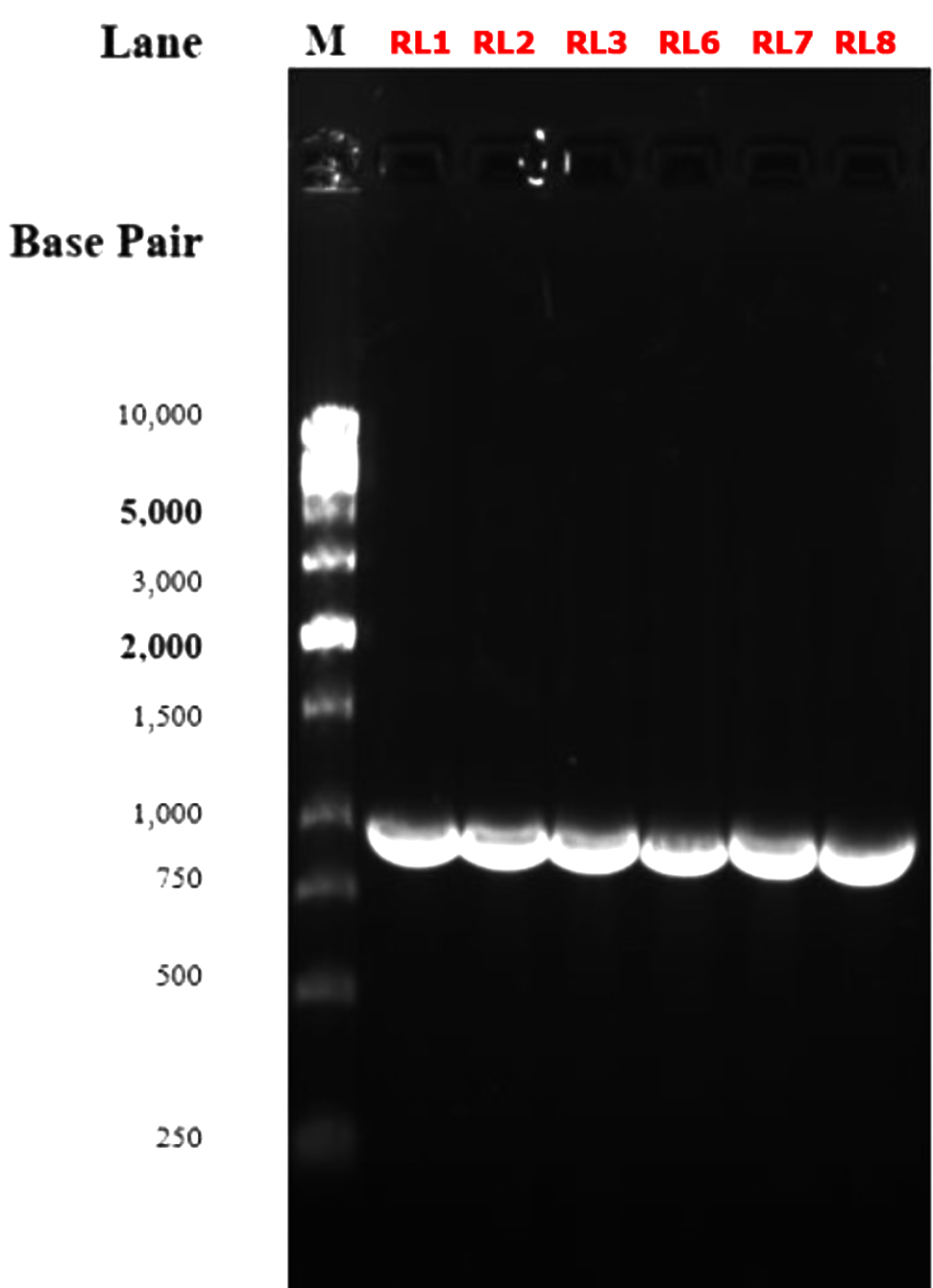
Figure 1. Agarose gel electrophoresis result of the amplification of the 16S rRNA gene of all 6 bacterial isolates
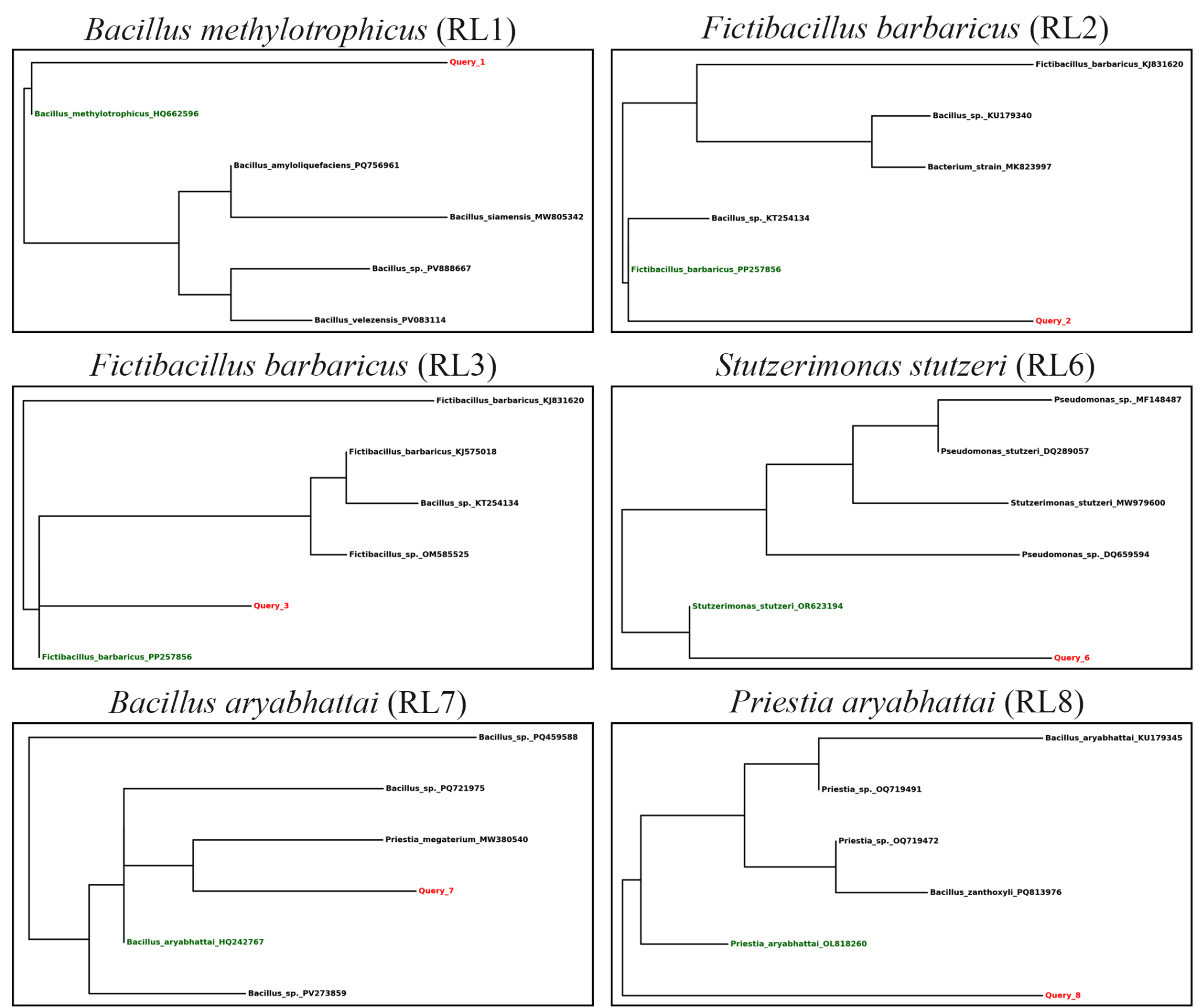
Figure 2. Neighbor-joining phylogenetic tree analysis of all bacterial isolates
Table 1. All bacterial strains identified through NCBI Blast analysis and their percentage of sequence similarity
Bacterial code |
Bacterial species |
Percentage of sequence similarity (%) |
|---|---|---|
RL1 |
Bacillus methylotrophicus |
98.68% |
RL2 |
Fictibacillus barbaricus |
99.02% |
RL3 |
Fictibacillus barbaricus |
99.37% |
RL6 |
Stutzerimonas stutzeri |
98.94% |
RL7 |
Bacillus aryabhattai |
99.44% |
RL8 |
Priestia aryabhattai |
98.82% |
In the present study, one bacterial isolate, Bacillus methylotrophicus (RL1), was selected (Figure 3). Colony morphology on a streak agar plate showed creamy-white, opaque, raised colonies with irregular and lobate margins (Figure 3A). This isolate demonstrated a strong ability to produce exopolysaccharides (EPS), as shown in Figure 3B (purple arrow) and was the most frequently detected across all experimental replicates. Because of its EPS-producing capacity, Bacillus methylotrophicus is expected to adhere effectively to both AMF spores and plant roots during hydroponic cultivation. Additionally, EPS promotes adherence to plant root surfaces to form mycorrhizal colonies. Gram staining and microscopic examination revealed that Bacillus methylotrophicus is a Gram-positive, rod-shaped bacterium (Figure 3C). This strain was selected for use in the greenhouse experiments.
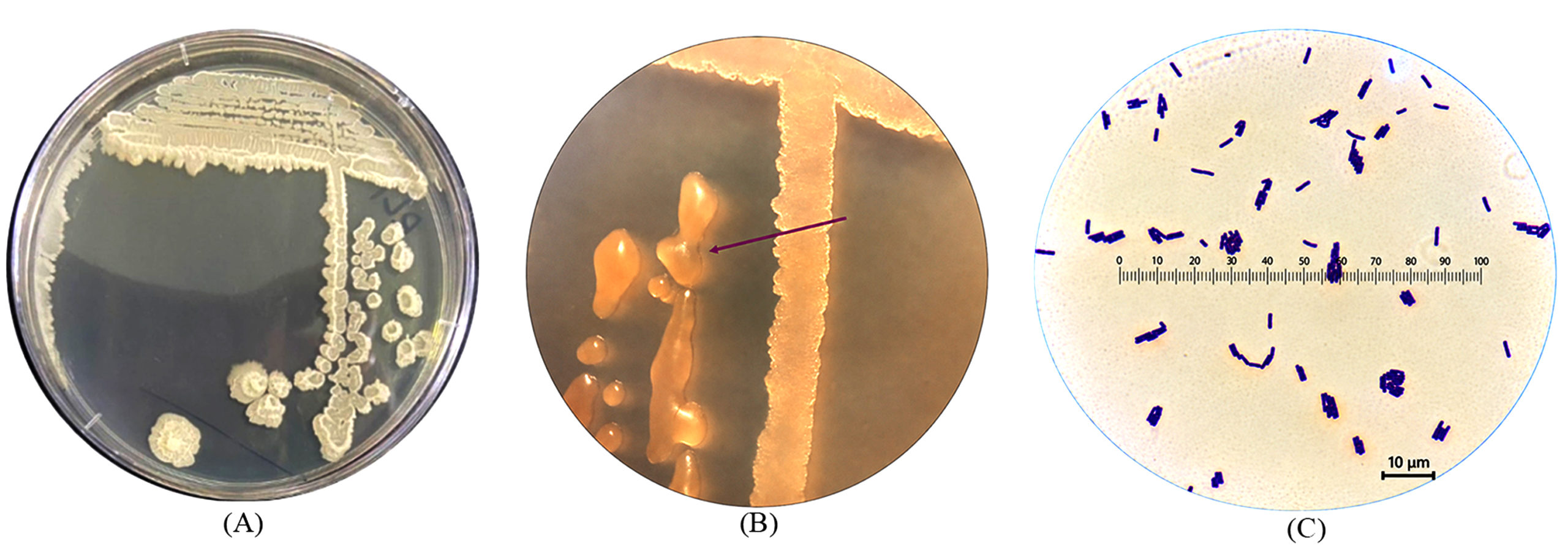
Figure 3. Morphological characteristics of Bacillus methylotrophicus (RL1). (A) Colony morphology on a streak agar plate. (B) Colony surface morphology observed under a stereomicroscope after 48 hours of incubation. (C) Gram-positive staining, observed at 1500× magnification
Effect of AMF colonization of rice seedlings in pipette tips cultivation
The aim of this study was to assess whether AMF can colonize rice roots growing under hydroponic conditions supported in pipette tips. Based on the results of rice seedling cultivation using pipette tips (Figure 4), seedling growth was observed across all three treatments. Treatments supplemented with 1 or 2 g of arbuscular mycorrhizal fungi (AMF) soil inoculum exhibited superior growth compared with the control group, which did not receive AMF inoculation.
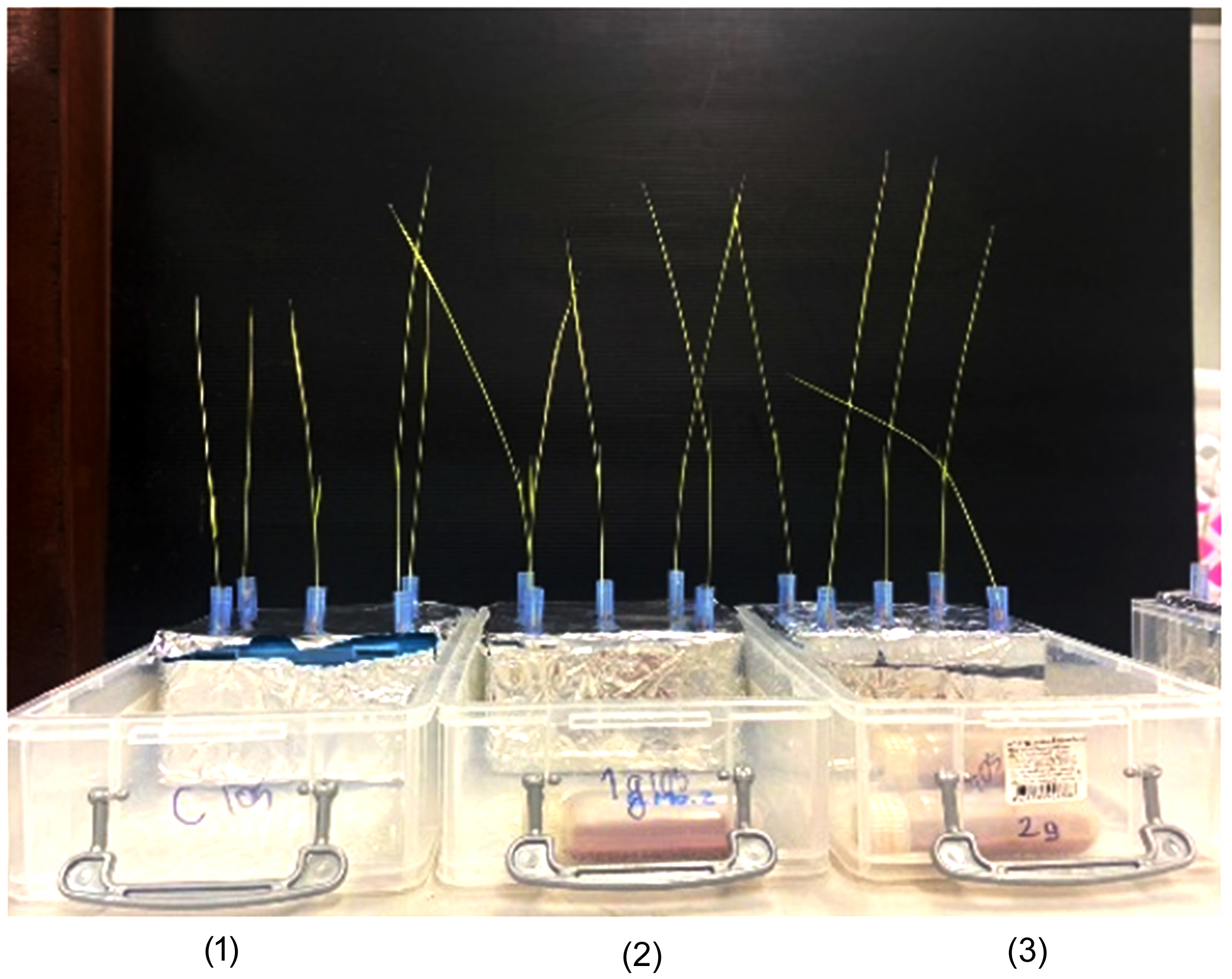
Figure 4. Results of the pipette tip rice cultivation experiment using soil inoculum treatments: (1) non-inoculated control; (2) 1 g soil inoculum; (3) 2 g soil inoculum
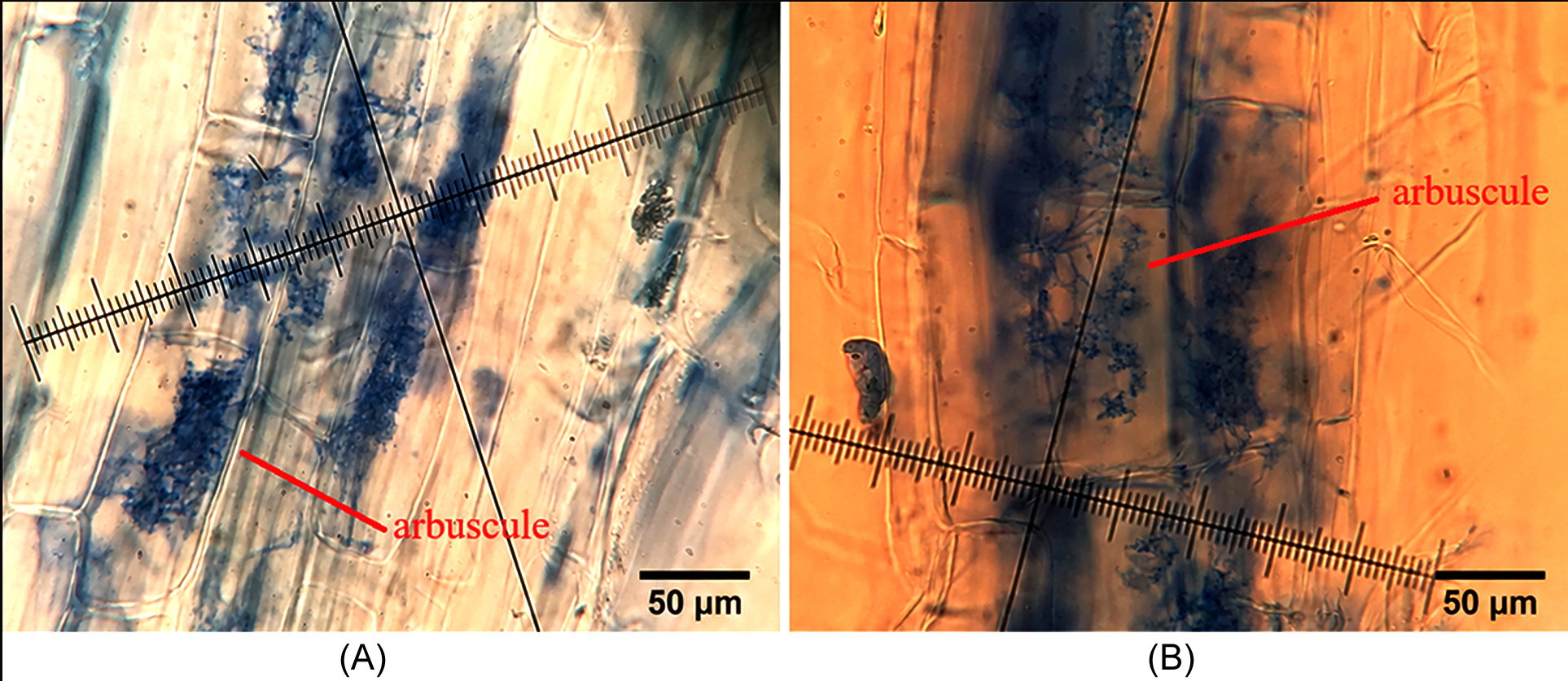
Figure 5. Microscopic evaluation of AMF colonization in the rice roots from the pipette tip cultivation system. AMF-colonized root segments showing characteristic fungal structures following Parker ink staining, (A) and (B) arbuscule structures formed within cortical root cells, observed at 400× magnification
According to the experimental results presented in Table 2, 1 g of soil inoculum was sufficient to serve as an AMF starter culture and demonstrated the potential to promote AMF proliferation in the nutrient solution. This was confirmed by microscopic examination of root colonization (Figure 5). These preliminary findings suggest that hydroponic cultivation systems can accommodate AMF inoculation, thereby supporting the feasibility of up-scaling to greenhouse experiments in subsequent research phases.
Table 2. AMF colonization at soil inoculum application rates of 1 and 2
control (non-inoculated with AMF) |
1 g soil inoculum |
2 g soil inoculum |
|---|---|---|
– |
+ |
+ |
“–” indicates the absence of AMF root colonization, whereas “+” indicates the presence of AMF root colonization
Greenhouse experiment
The hydroponic cultivation experiment conducted under greenhouse conditions (Figure 6) demonstrated that plant growth in treatments that received the fully recommended nutrient solution application rate (NS1) was inferior to that observed in treatments with reduced nutrient solution application (NS2). The interaction effects of arbuscular mycorrhizal fungi (Funneliformis mosseae), mycorrhiza helper bacteria (Bacillus methylotrophicus), and nutritional solution (NS) concentrations on rice growth and AMF colonization (Table 3 and Figure 6) showed that agronomic data, including plant height, fresh weight of leaves and roots, and root dry weight, including AMF colonization percentage, were significantly affected by treatments (P < 0.0001), indicating strong interactions between microbial inoculation and nutrient availability. AMF with low amounts of nutrient supply exhibited the highest degree of root colonization; however, AMF colonization levels varied considerably among treatments. In contrast, no AMF colonization was detected in the non-inoculated controls throughout the experimental period. Plant height varied significantly among treatments, with AMF and low levels of nutrient supply producing the tallest plants.
Table 3. Interactive effect of arbuscular mycorrhizal fungus (Funneliformis mosseae) and mycorrhiza helper bacteria (Bacillus methylotrophicus) on height, fresh weight of leaves and roots, dry root weight, and AMF colonization percentage of rice
Treatment |
Height (In) |
Fresh weight (g Plant-1) |
Fresh root weight (g Plant-1) |
Dry root weight (g Plant-1) |
AMF Colonization (%) |
|---|---|---|---|---|---|
1. Control (NS1) |
9.10 ± 0.72a |
0.07 ± 0.02a |
1.02 ± 0.02a |
0.00 ± 0.00a |
0.00a |
2. Control (NS2) |
40.87 ± 1.05bc |
46.35 ± 9.91b |
27.45 ± 4.23b |
2.62 ± 0.69b |
0.00a |
3. AMF (NS1) |
12.17 ± 0.57a |
0.19 ± 0.03a |
1.10 ± 0.03a |
0.00 ± 0.00a |
21.17 ± 4.96b |
4. AMF (NS2) |
46.14 ± 1.71c |
59.46 ± 13.41b |
33.79 ± 5.36b |
3.17 ± 0.86b |
78.67 ± 4.87d |
5. MHB (NS1) |
12.18 ± 1.81a |
0.00 ± 0.00a |
1.14 ± 0.09a |
0.00 ± 0.00a |
0.00a |
6. MHB (NS2) |
40.37 ± 1.53bc |
43.42 ± 5.82b |
25.05 ± 3.83b |
2.52 ± 0.54b |
0.00a |
7. AMF + MHB (NS1) |
12.73 ± 1.24a |
0.00 ± 0.00a |
1.04 ± 0.04a |
0.00 ± 0.00a |
32.50 ± 2.17bc |
8. AMF + MHB (NS2) ANOVA P-value |
39.02 ± 2.70b |
45.53 ± 12.36b |
20.92 ± 5.00b |
2.50 ± 0.71b |
39.67 ± 1.71c |
Treatment |
Numbers following the means represent the standard error (±SE) of six replicates. Means followed by the same letter do not significantly differ among treatments according to Tukey’s HSD test (P ≤ 0.05). NS1 is high levels of nutrient solutions A and B. NS2 is low levels of nutrient solutions A and B
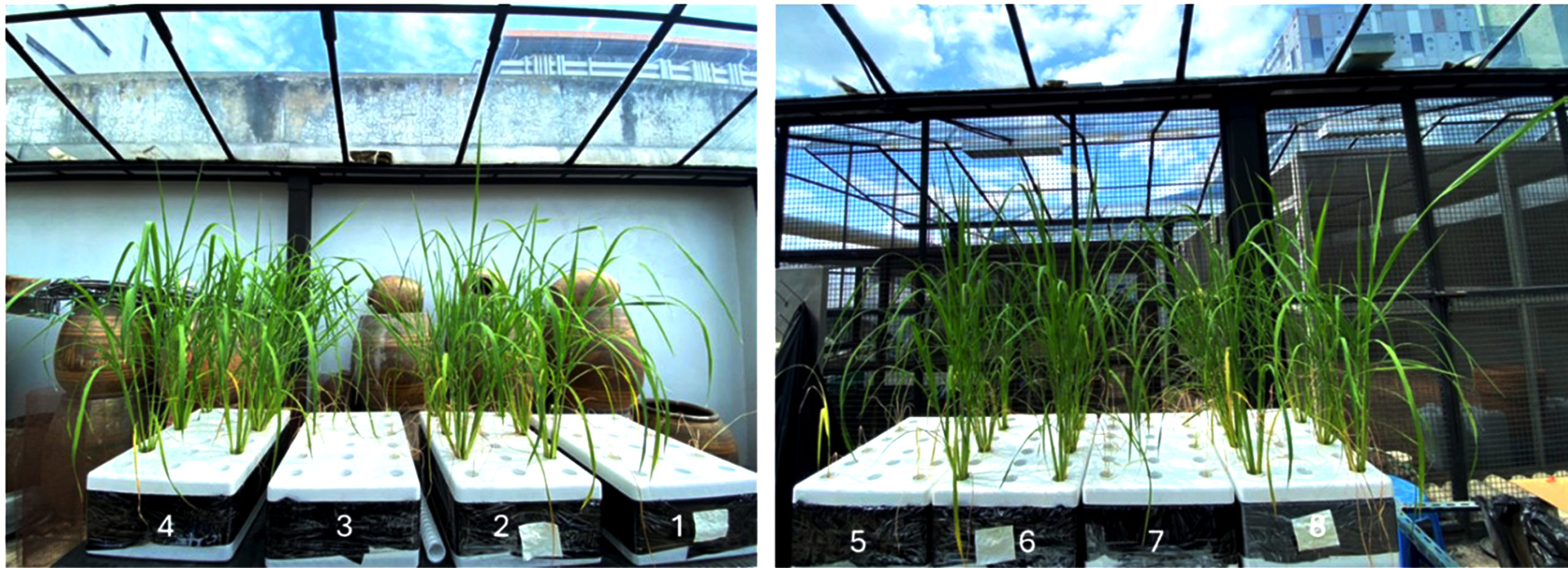
Figure 6. The hydroponic cultivation under greenhouse conditions: (1) Control with no microorganism inoculation at NS1; (2) Control with no microorganism inoculation at NS2; (3) Single inoculation of AMF at NS1; (4) Single inoculation of AMF at NS2; (5) Single inoculation of MHB at NS1; (6) Single inoculation of MHB at NS2; (7) Co-inoculation of AMF and MHB at NS1; (8) Co-inoculation of AMF and MHB at NS2. NS1 is high levels of nutrient solutions A and B. NS2 is low levels of nutrient solutions A and B
Rice plant growth was restricted in all treatments under the high nutrient solution level (NS1), and microbial inoculation did not result in significant improvements in rice plant height or biomass compared to the control treatment (Table 3). Although AMF colonization was observed in AMF-inoculated treatments, with colonization rates of 21.17% in the AMF alone and 32.50% in the AMF + MHB treatment, these colonization levels did not result in increased plant growth. This response implies that the functional advantages of AMF are limited, because increasing nutritional availability decreased plant dependence on mycorrhizal symbiosis.
In contrast, under low-nutrient conditions (NS2), rice growth was markedly enhanced (Table 3), particularly in AMF-inoculated plants. The AMF (NS2) treatment produced the tallest plants, largest fresh weight of leaves and roots, and largest root dry weight, accompanied by a significantly higher AMF colonization rate (78.67%) than the other treatments. AMF are important for improving nutrient acquisition under nutrient-limited conditions, as evidenced by the substantial correlation between AMF colonization and higher biomass.
These results further indicated that excessive nutrient supply constrained plant growth (Table 3). The low nutrient supply treatments did not significantly differ in the fresh weight of leaves and roots or root dry weight of the rice plants; however, these parameters were consistently higher than those recorded in treatments receiving the full nutrient solution rate.
Application of MHB alone under NS2 improved plant growth relative to NS1 treatments, but did not induce AMF colonization, indicating that nutritional availability, not microbial symbiosis, was the main factor driving the observed responses in plant growth. When AMF and MHB were co-cultured under NS2, plant growth and AMF colonization were intermediate compared with AMF alone. AMF colonization in the combined treatment (39.67%) was significantly lower than that observed in AMF (NS2), indicating that the selected MHB strain did not enhance AMF establishment or function under the experimental conditions.
Overall, these results demonstrated that the effectiveness of AMF and MHB was strongly influenced by nutrient availability. AMF significantly promoted plant growth under low-nutrient conditions, whereas the benefits diminished under high-nutrient conditions. The absence of synergistic effects between AMF and MHB highlights the importance of selecting appropriate microbial strains and environmental conditions to develop microbial consortia for sustainable rice production.
Our findings revealed that the selection of MHB (Bacillus methylotrophicus) was focused on isolates that produce exopolysaccharides (EPS). Bacterial association with AMF spores and intraradical hyphae has been linked to EPS synthesis, which supports MHB aggregation and attachment to AMF spore walls.20 EPS formation also simplifies nutrient and water retention, and induces systemic plant tolerance in in vitro and in vivo studies.21,22 In addition, EPS can promote the growth of roots and shoots.23 Because of EPS production, MHB can increase plant stress tolerance of plants.22 Moreover, MHB increases the fungal spore production.24,25 The isolate Bacillus methylotrophicus from AMF spores in this study was a Gram-positive bacterium. Many Gram-positive MHB are beneficial microbes that facilitate the development of mycorrhizal symbiosis; additionally, they help plants absorb nutrients more effectively and promote plant growth.26-28 The role of direct physical interactions in the MHB-mediated enhancement of spore germination has also been emphasized.29 Selvakumar et al.20 reported that more Gram-positive bacteria than Gram-negative bacteria were linked to AMF spores. Similarly, many studies have observed a synergistic interaction between Funneliformis mosseae and many Gram-positive bacteria.30,31 Therefore, this bacterial isolate was selected for the present study.
In the current study, AMF colonized rice roots during pipette tip cultivation. Das et al.32 revealed that the tip-wick hydroponic format was successfully utilized for AMF root colonization. The tip-wick method supports AMF inoculation and guides AMF-colonized roots into a nutrient solution that is aerated for rice planting.32 AMF initially developed within the wool layer and subsequently grew toward the roots, which were freely suspended in the nutrient solution.32 Several studies have reported that hydroponic techniques have the potential to enhance AMF spore production; both AMF and plants utilize water and nutrient solutions as growth media.33,34 Romero-Ceciliano et al.35 discussed how the hydroponic technique offers advantages over conventional methods using soil as a substrate, increasing the production of spores or propagules several times, while using less time and space. However, no studies have reported the optimal inoculum density for AMF cultivation in hydroponic systems. The results of the present study demonstrated that inoculum density had no significant effect on the hydroponic system.
Othman et al.36 concluded that using AMF in hydroponic systems is a sustainable and eco-friendly way to increase antioxidant compounds, improve crop quality and output, and reduce reliance on chemical fertilizers. However, our findings showed that high levels of nutrient supply restricted rice plant growth and AMF colonization of rice roots. Similar findings have been reported in previous studies, in which increased nutrient levels, particularly phosphorus, suppressed the contribution of AMF to plant growth because of reduced carbon allocation from the host plants.37,38 Under low-nutrient conditions, rice growth is enhanced by AMF, consistent with numerous reports demonstrating that AMF enhance phosphorus uptake, root development, and overall nutrient-use-efficiency, especially in low-input agricultural systems.39,40
The nutrient solution B (NSb), which contained Ca(NO3)‚ and Fe-EDTA, is likely to inhibit AMF colonization. Pandit et al.33 also suggested that nitrate-rich solutions result in reduced AMF colonization, plant growth, and AMF spore production in hydroponic systems. Overall, the AMF and low nutrient solution treatments exhibited a consistent trend toward superior performance across all measured growth parameters compared to the other treatments. Nurbaity et al.8 also suggested that hydroponic culture of mycorrhiza has the potential for harvesting roots and fungal propagules without contamination; furthermore, lower nutrient supply than normal could reduce the production of AMF. However, the symbiotic effects of AMF on host plants in hydroponic cultivation systems have not been well studied.33
Co-culture of AMF and MHB demonstrated that MHB did not promote AMF colonization. The lack of synergistic interactions has been reported previously and may result from competition for root colonization sites, alterations in the rhizosphere microbial balance, or strain-specific incompatibility between AMF and MHB.9,41 However, these findings support the targeted application of AMF as a biofertilizer in low-input systems to enhance crop performance while reducing dependence on chemical fertilizers.42,43
The present study revealed AMF colonization occurred in hydroponic rice cultivation using both pipette tips and greenhouse cultivation. The growth results of rice plants, including height, fresh weight of leaves and roots, and root dry weight, in the treatment with reduced nutrient supply A and B did not show significant differences compared to the other treatments. This study utilized excellent conditions for plant growth and offered several advantages. Roots grown in hydroponic systems are not typically contaminated with soil or other impurities. This reduces the risk of contamination and plant diseases. Therefore, research related to root growth and function in hydroponic systems are facilitated and are more efficient for analyzing and studying root-related phenomena in plants.
ACKNOWLEDGMENTS
The authors would like to express their sincere gratitude to the technicians of the Department of Microbiology, Faculty of Science, Kasetsart University, for their invaluable technical assistance and support throughout the conduct of this study. The authors also gratefully acknowledge the Faculty of Science, Kasetsart University, for providing financial support and the facilities necessary to carry out this research.
CONFLICT OF INTEREST
The authors declare that there is no conflict of interest.
AUTHORS’ CONTRIBUTION
All authors listed have made a substantial, direct, and intellectual contribution to the work and approved it for publication.
FUNDING
None.
DATA AVAILABILITY
All datasets generated or analyzed during this study are included in the manuscript.
ETHICS STATEMENT
Not applicable.
- George E, Marschner H, Jakobsen I. Role of arbuscular mycorrhizal fungi in uptake of phosphorus and nitrogen from soil. Crit Rev Biotechnol. 1995;15(3-4):257-270.
Crossref - Newsham KK, Fitter AH, Watkinson AR, Arbuscular Mycorrhiza Protect an Annual Grass from Root Pathogenic Fungi in the Field. J Ecol. 1995;83(6):991-1000. doi.: 10.2307/2261180
- Duan X, Neuman DS, Reiber JM, Green CD, Saxton AM, Auge RM. Mycorrhizal influence on hydraulic and hormonal factors implicated in the control of stomatal conductance during drought. J Exp Bot. 1996;47(10):1541-1550.
Crossref - Bucking H, Kafle A. Role of arbuscular mycorrhizal fungi in the nitrogen uptake of plants: current knowledge and research gaps. Agronomy. 2015;5(4):587-612.
Crossref - Smith SE, Read DJ. Mineral nutrition, toxic element accumulation and water relations of arbuscular mycorrhizal plants. Mycorrhizal Symbiosis. 2008;3:11-145.
Crossref - Berruti A, Lumini E, Balestrini R, Bianciotto V. Arbuscular mycorrhizal fungi as natural biofertilizers: let’s benefit from past successes. Front Microbiol. 2016;6:1559.
Crossref - Vangelisti A, Cela F, Simoni S, et al. Arbuscular mycorrhizal symbiosis allows to overcome phosphorus deficiency in soilless culture of Lactuca sativa: A phenotypic and transcriptomic analysis. Scientia Horticulturae. 2024;334:113324.
Crossref - Nurbaity A, Istifadah N, Haryantini B, Ilhami M, Habibullah M, Arifin M. Optimization of hydroponic technology for production of mycorrhiza biofertilizer. IOP Conf Ser: Earth Environ Sci. 2019;347:012017.
Crossref - Frey-Klett P, Garbaye J, Tarkka M. The mycorrhiza helper bacteria revisited. New Phytologist. 2007;176(1):22-36.
Crossref - Garbaye J. Tansley review no. 76 helper bacteria: a new dimension to the mycorrhizal symbiosis. New Phytol. 1994;128(2):197-210.
Crossref - Tarkka MT, Lehr NA, Hampp R, Schrey SD. Plant behavior upon contact with Streptomycetes. Plant Signal Behav. 2008;3(11):917-919.
Crossref - Vanavichit A, Kamolsukyeunyong W, Siangliw M, et al. Thai Hom Mali Rice: Origin and breeding for subsistence rainfed lowland rice system. Rice. 2018;11(1):20.
Crossref - Bao-Rong Lu B-RL. The challenge of in situ conservation of crop Wild relatives in the biotechnology era-a case study of Wild rice species. Agrobiodiversity conservation: securing the diversity of crop wild relatives and landraces. CABI Wallingford UK. 2012:211-217.
Crossref - Pame ARP, Vithoonjit D, Meesang N, et al. Improving the sustainability of rice cultivation in Central Thailand with biofertilizers and laser land leveling. Agronomy. 2023;13(2):587.
Crossref - Gerdemann JW, Nicolson TH. Spores of mycorrhizal Endogone species extracted from soil by wet sieving and decanting. Trans Br Mycol Soc. 1963;46(2):235-244.
Crossref - Brundrett M, Bougher N, Dell B, Grove T, Malajczuk N. Working with mycorrhizas in forestry and agriculture. 1996.
- Vierheilig H, Coughlan AP, Wyss U, Piche Y. Ink and vinegar, a simple staining technique for arbuscular-mycorrhizal fungi. Appl Environ Microbiol. 1998;64(12):5004-5007.
Crossref - Bourles A, Guentas L, Charvis C, et al. Co-inoculation with a bacterium and arbuscular mycorrhizal fungi improves root colonization, plant mineral nutrition, and plant growth of a Cyperaceae plant in an ultramafic soil. Mycorrhiza. 2020;30(1):121-131.
Crossref - Giovannetti M, Mosse B. An evaluation of techniques for measuring vesicular arbuscular mycorrhizal infection in roots. New Phytol. 1980;84(3):489-500.
Crossref - Selvakumar G, Krishnamoorthy R, Kim K, Sa T-M. Genetic diversity and association characters of bacteria isolated from arbuscular mycorrhizal fungal spore walls. PLoS One. 2016;11(8):e0160356.
Crossref - Cam S, Bicek S. The effects of temperature, salt, and phosphate on biofilm and exopolysaccharide production by Azotobacter spp. Arch Microbiol. 2023;205(3):87.
Crossref - de Carvalho Neta SJ, Araתjo VLVP, Fracetto FJC, et al. Growth-promoting bacteria and arbuscular mycorrhizal fungus enhance maize tolerance to saline stress. Microbiol Res. 2024;284:127708.
Crossref - Gul K, Khan RS, Iqbal A, et al. Isolation, biochemical characterization, and antimicrobial activities of EPS-producing bacterial endophytes from Moringa oleifera. Folia Microbiol. 2025:1-17.
Crossref - Bao X, Zou J, Zhang B, Wu L, Yang T, Huang Q. Arbuscular mycorrhizal fungi and microbes interaction in rice mycorrhizosphere. Agronomy. 2022;12(6):1277.
Crossref - Khalid M, Hassani D, Bilal M, Asad F, Huang D. Influence of bio-fertilizer containing beneficial fungi and rhizospheric bacteria on health promoting compounds and antioxidant activity of Spinacia oleracea L. Bot Stud. 2017;58(1):35.
Crossref - Emmanuel OC, Babalola OO. Productivity and quality of horticultural crops through co-inoculation of arbuscular mycorrhizal fungi and plant growth promoting bacteria. Microbiol Res. 2020;239:126569.
Crossref - Xie L, Lehvavirta S, Timonen S, Kasurinen J, Niemikapee J, Valkonen JP. Species-specific synergistic effects of two plant growth-promoting microbes on green roof plant biomass and photosynthetic efficiency. PloS one. 2018;13(12):e0209432.
Crossref - Mohandas S, Poovarasan S, Panneerselvam P, et al. Guava (Psidium guajava L.) rhizosphere Glomus mosseae spores harbor actinomycetes with growth promoting and antifungal attributes. Scientia Horticulturae. 2013;150:371-376.
Crossref - Nasslahsen B, Prin Y, Ferhout H, Smouni A, Duponnois R. Mycorrhizae helper bacteria for managing the mycorrhizal soil infectivity. Front Soil Sci. 2022;2:979246.
Crossref - Yu L, Zhang H, Zhang W, Liu K, Liu M, Shao X. Cooperation between arbuscular mycorrhizal fungi and plant growth-promoting bacteria and their effects on plant growth and soil quality. Peer J. 2022;10:e13080.
Crossref - Barogh RB, Hassanpanah D, Esmaeilpour B, Godehkahriz SJ, Kalateh Jari S. Co-inoculation of arbuscular mycorrhizal fungi and plant growth-promoting rhizobacteria improve growth, biochemical attributes, and nutritional status of potato (Solanum tuberosum L.) minitubers. J Soil Sci Plant Nutr. 2023;23(3):3447-3460.
Crossref - Das D, Torabi S, Chapman P, Gutjahr C. A flexible, low-cost hydroponic co-cultivation system for studying arbuscular mycorrhiza symbiosis. Front Plant Sci. 2020;11:63.
Crossref - Pandit A, Gunsola D, Kumar R, Panneerselvam P, Mitra D. Advancing innovative techniques in arbuscular mycorrhizal Fungi propagation: A key to sustainable agriculture and ecosystem management. J Microbiol Methods. 2025;236:107200.
Crossref - Shi F, Wang X, He X, et al. Evaluation of the efficient propagation of Rhizophagus intraradices and its inoculation effects on rice. Appl Environ Microbiol. 2025:e00558-25.
Crossref - Romero-Ceciliano M, Andrade-Torres A, Artavia-Salazar E, Solis-Ramos LY. Establishing monoxenic culture of arbuscular mycorrhizal fungus glomus sp. through in vitro root organ culture and Swietenia macrophylla king in vitro cultures. Agriculture. 2025;15(7):673.
Crossref - Othman YA, Alananbeh KM, Tahat MM. Can Arbuscular Mycorrhizal Fungi Enhance Crop Productivity and Quality in Hydroponics? A Meta-Analysis. Sustainability. 2024;16(9):3662.
Crossref - Konvalinková T, Püschel D, Řezáčová V, Gryndlerová H, Jansa J. Carbon flow from plant to arbuscular mycorrhizal fungi is reduced under phosphorus fertilization. Plant Soil. 2017;419(1):319-333.
Crossref - Johnson NC, Wilson GW, Wilson JA, Miller RM, Bowker MA. Mycorrhizal phenotypes and the law of the
minimum. New Phytol. 2015;205(4):1473-1484.
Crossref - Smith SE, Jakobsen I, Gronlund M, Smith FA. Roles of arbuscular mycorrhizas in plant phosphorus nutrition: interactions between pathways of phosphorus uptake in arbuscular mycorrhizal roots have important implications for understanding and manipulating plant phosphorus acquisition. Plant Physiol. 2011;156(3):1050-1057.
Crossref - Schroeder MS, Janos DP. Plant growth, phosphorus nutrition, and root morphological responses to arbuscular mycorrhizas, phosphorus fertilization, and intraspecific density. Mycorrhiza. 2005;15(3):203-216.
Crossref - Bharadwaj DP, Alstrom S, Lundquist P-O. Interactions among Glomus irregulare, arbuscular mycorrhizal spore-associated bacteria, and plant pathogens under in vitro conditions. Mycorrhiza. 2012;22(6):437-447.
Crossref - Gianinazzi S, Gollotte A, Binet M-N, van Tuinen D, Redecker D, Wipf D. Agroecology: the key role of arbuscular mycorrhizas in ecosystem services. Mycorrhiza. 2010;20(8):519-530.
Crossref - Chen M, Arato M, Borghi L, Nouri E, Reinhardt D. Beneficial services of arbuscular mycorrhizal fungi-from ecology to application. Front Plant Sci. 2018;9:1270.
Crossref
© The Author(s) 2026. Open Access. This article is distributed under the terms of the Creative Commons Attribution 4.0 International License which permits unrestricted use, sharing, distribution, and reproduction in any medium, provided you give appropriate credit to the original author(s) and the source, provide a link to the Creative Commons license, and indicate if changes were made.